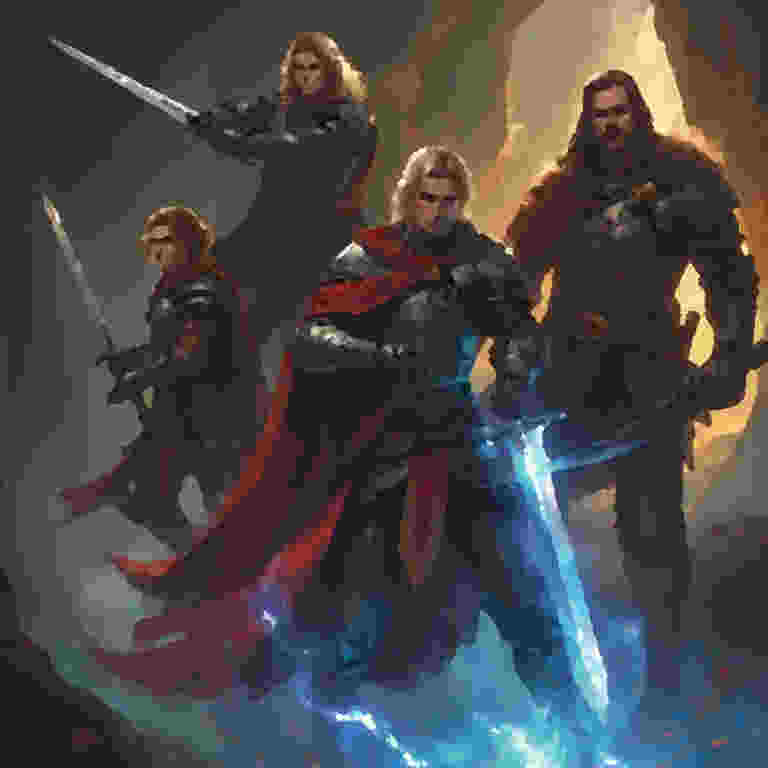

In the vast ecosystem of video games, few genres offer the profound sense of personal investment and transformative journey quite like the Role-Playing Game (RPG). At its core, the RPG is not defined by a specific setting or combat style, but by a fundamental promise: the promise of becoming. It is a genre built on character growth, meaningful choice, and immersive world navigation, where the player’s decisions shape not just the outcome, but the very identity of the protagonist and the world they inhabit. Its journey from niche tabletop adaptation to the dominant narrative form in gaming is a story of technological evolution, creative ambition, and our timeless desire to live another life.
Defining the RPG DNA: The Pillars of Persona
The RPG genre is built upon interconnected systems that facilitate its core fantasy:
- Character Progression & Statistical Growth: This is the genre’s heartbeat. Through gaining Experience Points (XP) and Leveling Up, characters increase numerical attributes (Strength, Dexterity, Intelligence, etc.), learn new skills or spells, and become quantitatively more powerful. This creates a constant, satisfying feedback loop of earned improvement, a tangible record of the journey.
- Player Agency and Meaningful Choice: True RPGs offer branching paths. Choices in dialogue, quest solutions, and moral alignments should have tangible consequences, altering story outcomes, character relationships, and the world state. This agency fosters a deep sense of ownership and personal stake in the narrative.
- Inventory & Resource Management: The character is an extension of their gear. Managing weapons, armor, potions, crafting materials, and currency is a core strategic layer. Finding a powerful sword or crafting the perfect piece of armor is a major gameplay milestone.
- Exploration of a Persistent World: RPGs present a world that exists independently of the player. Towns, dungeons, wilderness areas, and hidden secrets are there to be discovered. The joy is often in the journey between story points, uncovering lore, and feeling like an explorer in a living, breathing setting.
- Combat as a Strategic Expression: While styles vary (turn-based, real-time, tactical), combat in RPGs is typically a test of buildcraft and resource management. It’s where your character progression choices are validated, requiring strategic use of abilities, party synergy, and consumable items.
The Hero’s Journey: The Evolution of the RPG
The Ancestral Roots: Tabletop and Text (1970s)
The RPG was born from tabletop games like Dungeons & Dragons. The first computer RPGs, such as Akalabeth: World of Doom (1979) and the seminal Wizardry and Ultima series, were direct digital translations. They used simple text or primitive graphics to simulate the D&D experience: creating a party, exploring first-person dungeons, and managing stats. Their popularity was cultish but fervent, proving the digital potential of the tabletop formula.
The Japanese Renaissance and Genre Defining (1980s)
While Western RPGs (WRPGs) focused on complex simulations, Japan reimagined the genre for a new medium.
- The Console Revolution: Dragon Quest (1986) was the watershed moment. Designer Yuji Horii simplified the complex UI of PC RPGs, focused on a cohesive, emotional story inspired by Dragon Ball artist Akira Toriyama, and made it accessible on the Nintendo Famicom. It wasn’t just a game; it was a national phenomenon that established the template for the Japanese RPG (JRPG).
- The Narrative Epic: Final Fantasy (1987) arrived soon after, responding to Dragon Quest with a more dramatic, cinematic flair. It cemented iconic staples: the Active Time Battle (ATB) system, a focus on pre-written, character-driven narratives, and a grand, world-saving scale.
- The Zenith of 16-bit Storytelling: The Super Nintendo era saw the genre reach what many consider its artistic peak. Chrono Trigger (1995) perfected pacing and multiple endings. Final Fantasy VI (1994) delivered an opera-worthy narrative with a sprawling cast. Secret of Mana (1993) pioneered real-time action-RPG multiplayer. These games moved the genre from niche to mainstream must-play.
The 3D Revolution and Genre Division (1990s-2000s)
The leap to 3D consoles caused the genre to splinter into distinct, powerful branches.
- The Cinematic JRPG: Final Fantasy VII (1997) used CD-ROM technology to deliver a cinematic, emotionally charged narrative with 3D graphics and a legendary score, catapulting RPGs into the blockbuster stratosphere globally.
- The Open-World WRPG Rebirth: The Elder Scrolls III: Morrowind (2002) and later, Fallout 3 (2008), revived the Western tradition by offering unparalleled freedom. These were “wide-open sandbox” RPGs where the story was just one thread in a vast, explorable world full of player-driven discovery.
- The Tactical and Hybrid Evolution: Games like Final Fantasy Tactics (1997) and Disgaea (2003) pushed RPG strategy into grid-based combat. Deus Ex (2000) fused RPG systems with first-person immersion and player choice in a cyberpunk setting.
- Pocket Monsters as its own genre: At this time period, the Pokémon series become a beloved RPG staple, offering a unique blend of exploration, battle, and character growth that’s captivated fans for decades. From the iconic Pokémon Red and Green (1996) to the modern masterpieces like Pokémon Sword and Shield (2019), the series has consistently delivered engaging storylines, lovable creatures, and addictive gameplay. With games like Pokémon X and Y (2013), Pokémon Sun and Moon (2016), and Pokémon Diamond and Pearl (2006), the franchise has explored new worlds, introduced innovative mechanics, and pushed the boundaries of what’s possible in an RPG at the time. Whether you’re battling Gym Leaders, exploring vast regions, or crafting the ultimate team.
The Modern Mainstream Dominance (2010s-Present)
Today, RPG elements have permeated all genres, but the core genre itself has become a titan of the industry.
- The Open-World Standard: The Witcher 3: Wild Hunt (2015) and The Elder Scrolls V: Skyrim (2011) set a new bar for vast, hand-crafted worlds where every side quest feels novel and exploration is the primary reward.
- The Crowd-Funded Classic Revival: The success of Pillars of Eternity (2015) and Divinity: Original Sin 2 (2017) proved a massive hunger for the deep, isometric, choice-driven RPGs of the PC golden age, leading to modern masterpieces like Baldur’s Gate 3 (2023), which uses D&D 5th Edition rules to create an unprecedented level of systemic freedom and narrative reactivity.
- The Action-RPG Synthesis: Series like Dark Souls (2011) and Elden Ring (2022) married deep RPG customization, cryptic lore, and punishingly rewarding combat with seamless action, creating a new subgenre that prioritizes player skill and environmental storytelling.
- The Mass-Market Phenomenon: Games like The Legend of Zelda: Breath of the Wild (2017), while not pure RPGs, adopted the genre’s core pillars of exploration, progression, and open-ended problem-solving to universal acclaim, proving the RPG framework’s broad appeal.
MMORPGs as a Subset of RPG Games
Massively Multiplayer Online Role-Playing Games (MMORPGs) represent a dynamic subset of the broader RPG genre, characterized by their focus on online multiplayer experiences within expansive, persistent worlds. While traditional RPGs often emphasize single-player narratives and character development, MMORPGs invite thousands of players to interact, collaborate, and compete simultaneously. Games like Ragnarok Online and World of Warcraft set benchmarks for the genre, offering rich lore and vast environments to explore alongside a vibrant player community. RuneScape, known for its browser-based accessibility, provides an engaging mix of quests and social interactions, making it a staple in the MMORPG landscape. Meanwhile, Final Fantasy XIV combines a compelling story with community-driven gameplay, revitalizing the franchise with its engaging mechanics. Guild Wars 2 innovates with its event-driven world and dynamic combat, while MapleStory appeals to a younger audience with its colorful graphics and side-scrolling format. Collectively, these titles highlight the unique aspects of MMORPGs, emphasizing social connectivity and a shared gaming experience, setting them apart within the RPG family.
The Engine of Enchantment: Why RPGs Captivate
The genre’s enduring and expansive popularity stems from its unique fulfillment of deep psychological desires:
- The Ultimate Power Fantasy: It provides a structured, rewarding path from zero to hero. Watching your weak character evolve into a world-saving force through your decisions is inherently satisfying.
- The Agency of Another Life: RPGs offer the profound escape of inhabiting another persona in another world. You can be a noble paladin, a cunning thief, or a snarky space mercenary, making choices you wouldn’t in real life.
- The Satisfaction of Systems Mastery: The interlocking mechanics of stats, skills, equipment, and combat create a deep, systemic playground for optimization and creative “buildcraft,” appealing to the strategist in every player.
- The Depth of Immersive Worlds: They offer worlds with a sense of history, ecology, and culture that feels worth saving (or conquering). The lore is not just backdrop; it’s the soil from which the story grows.
- The Personalization of Narrative: In the best RPGs, the story feels like your story. The combination of character creation, branching dialogue, and consequential choices creates a narrative fingerprint unique to each playthrough.
Conclusion: The Never-Ending Quest
The RPG genre has evolved from mimicking dice rolls on a computer to becoming the premier vehicle for interactive storytelling and personal expression in gaming. It has proven that the most powerful graphics are not just on the screen, but in the mind’s eye of a player who sees their own unique hero reflected in the world.
From the humble beginnings of Dragon Quest to the vast, player-shaped narratives of Baldur’s Gate 3 and Elden Ring, the RPG’s core promise remains unchanged: that you are more than a player; you are an author, an architect, and the protagonist of a grand adventure written in stats, choices, and discovered lore. Its popularity is eternal because it speaks to our fundamental desire not just to play a game, but to live a story, to grow from within it, and to leave our own mark on a digital world. The quest is infinite, and the next character sheet is always waiting to be filled.
See also: 4 Top RPG games (opinion), 10 RPG-Exploration games (opinion).




Pingback: The Legend of One Piece — How Straw Hat Pirate Adventure Became Epic – Akusaa.com discuss Anime, Gaming, and misc things
In my opinion, the RPG genre conquered gaming because it offers more than simple challenges: it gives players a sense of identity, progress, and personal investment. Whether someone is exploring a huge fantasy world, building a party of unusual heroes, making moral choices, customizing a character, or simply watching numbers rise after an upgrade, RPGs create the satisfying feeling that time spent playing has a lasting effect. The genre is also flexible enough to combine with almost anything, including action combat, strategy, horror, sports management, survival, and even relaxing mobile gameplay. A good RPG makes players care about both the journey and the improvement of their characters, which is why people often remember their favorite companions, boss battles, towns, and story decisions for years. Its biggest strength is that it can appeal to different kinds of players: some enjoy deep stories, others love collecting equipment, experimenting with builds, exploring maps, or competing with friends. Even when two RPGs have completely different settings, they often share the same powerful loop of discovery, challenge, reward, and growth, making the genre remarkably addictive and adaptable.