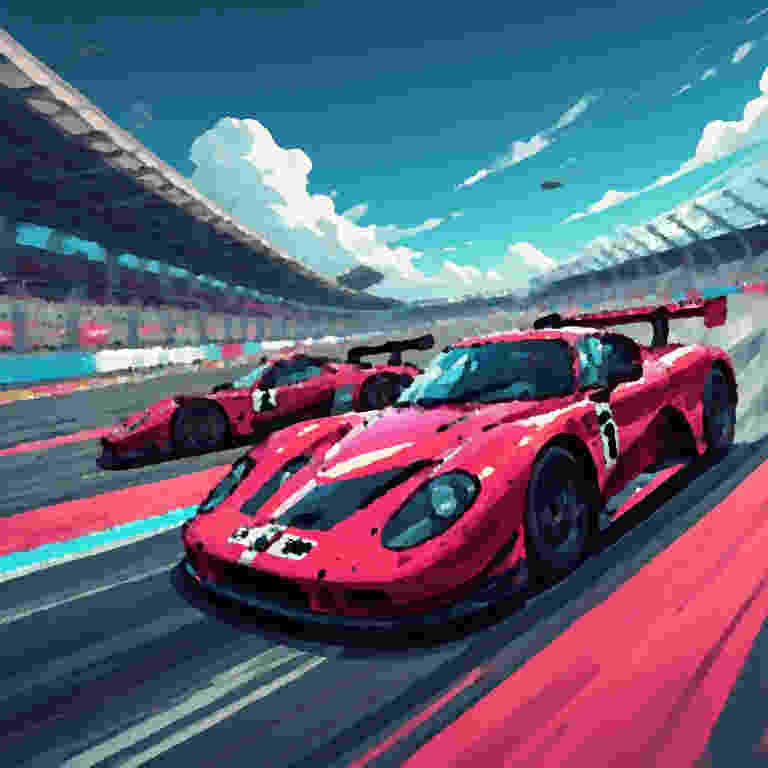

Racing games have been part of gaming history since the earliest arcade machines of the 1970s. Yet even today, decades later, they remain one of the most beloved genres across consoles, PC, and mobile. From realistic simulations to wild arcade experiences, racing games appeal to a wide audience—including competitive players, casual gamers, and even people who don’t normally play video games. But why? What makes racing games so universally enjoyable? And what qualities make a racing game “great”?
Why Gamers Love Racing Games
1. Instant, Universal Fun
Unlike some genres that require hours of learning rules or backstory, racing is instantly understandable:
“Go fast, try to win, don’t crash.”
This simplicity makes it appealing to players of all ages and backgrounds.
2. Natural Human Love for Speed
Racing games let people experience speed, adrenaline, and control in ways that are impossible or unsafe in real life.
Driving a supercar at 300 km/h through a mountain pass is thrilling—especially when there’s no real danger.
3. Competition Feels Pure and Fair
Racing is one of the most straightforward competitive formats.
No complicated stats, weapons, or random elements—just skill, reflexes, and track knowledge (especially in simulation games).
For competitive players, this purity is deeply satisfying.
4. Freedom and Exploration
Modern open-world racers like Forza Horizon 5 or The Crew 2 let gamers explore massive maps, discover secrets, and enjoy the world at their own pace.
It blends driving with adventure, which many players love.
5. Car Culture and Personal Passion
Many fans love real-world cars—how they look, sound, and perform.
Racing games act as a digital garage where players can collect dream cars they may never own in real life.
6. Customization & Creativity
From tuning engines to designing liveries, players get to personalize their ride.
Some spend more time painting cars than racing them.
7. Easy to Pick Up, Hard to Master
Good racing games are accessible for beginners but incredibly deep for veterans.
This creates lifelong enjoyment and encourages skill growth.
8. Nostalgia
Many gamers grew up with classics like:
- Need for Speed: Underground
- Gran Turismo 4
- Burnout 3: Takedown
- Mario Kart
These games shaped childhood memories—so the genre always feels special.
What Defines a Good Racing Game?
A great racing game can take many forms—arcade, simulation, kart racing, open-world, or track-based—but most truly loved titles share certain qualities.
1. Responsive and Enjoyable Driving Physics
Driving must feel “right” for the game’s style.
- In arcade racers, cars should feel smooth, fun, and exaggerated.
- In sim racers, physics must mimic real weight, grip, and speed.
Examples:
- Forza Motorsport (simulation leaning) for realistic handling
- Burnout Paradise (arcade) for fun and fluid control
- Gran Turismo 7 for detailed physics and car personality
A good racing game makes you want to drive just one more lap.
2. Strong Sense of Speed
Players need to feel the velocity:
- Motion blur
- Engine sound
- Camera shake
- Road detail
- Opponent pressure
Games like Wipeout, F-Zero GX, and Forza Horizon 5 excel in communicating high-speed excitement.
3. Rewarding Progression
A good racing game encourages players to:
- Unlock new cars
- Earn upgrades
- Progress through championships
- Improve skills
Gran Turismo‘s license tests, Forza’s skill progression, and Need for Speed’s story campaigns make players feel growth.
4. Variety of Cars, Tracks, and Events
Repetition kills racing games.
A good title offers:
- Many car classes
- Different track layouts
- Challenge modes
- Weather and time variations
Examples:
- Gran Turismo 7: over 400 cars, dynamic weather, classic tracks
- Mario Kart 8 Deluxe: creative courses with unique obstacles
- Forza Horizon 5: enormous open map with mixed terrain
5. Atmosphere and Presentation
Graphics, sound, UI design, and environment all play roles.
A good racing game creates a mood:
- Forza Horizon → festival vibe
- Need for Speed: Most Wanted → street racing tension
- Gran Turismo → elegant and serious
Good presentation immerses players and sticks in their memory.
6. Fair and Fun AI / Multiplayer
Opponents must be:
- Competitive
- Predictable
- Not cheating or rubber-banding excessively
Online modes must have:
- Smooth connection
- Fair matchmaking
- Clear rules
Good examples:
- iRacing for competitive online racing
- Gran Turismo Sport/GT7 for disciplined races
- Mario Kart for chaotic, casual fun
Examples of Beloved Racing Games
Simulation-Focused
- Gran Turismo 3 / 4 / 7
- Forza Motorsport series
- Assetto Corsa / ACC
- Project CARS (early entries)
- iRacing
Arcade / Open-World
- Forza Horizon series
- Need for Speed: Most Wanted (2005)
- Burnout 3: Takedown
- Midnight Club 3: DUB Edition
- The Crew
Kart / Family-Friendly
- Mario Kart series
- Crash Team Racing
Each game shows that racing can mean many things—from drifting at 200 km/h through neon streets to mastering every apex on a famous track.
Conclusion
Racing games remain popular because they combine universal human love for speed, competition, freedom, and beautiful machines. They offer quick fun, deep mastery, and endless replayability. A good racing game is defined not by realism alone, but by how well it captures the feeling of driving—whether that means precision simulation or pure arcade joy.
From the classics of the early 2000s to modern masterpieces, racing games continue to evolve while keeping the same heartbeat: the thrill of speed and the joy of being in control of your own journey on the road.




Racing games feels good. Playing mario kart feels good.
Pingback: 6 Best Final Fantasy Games People Are Loving in 2025 – Akusaa.com discuss Anime, Gaming, and misc things