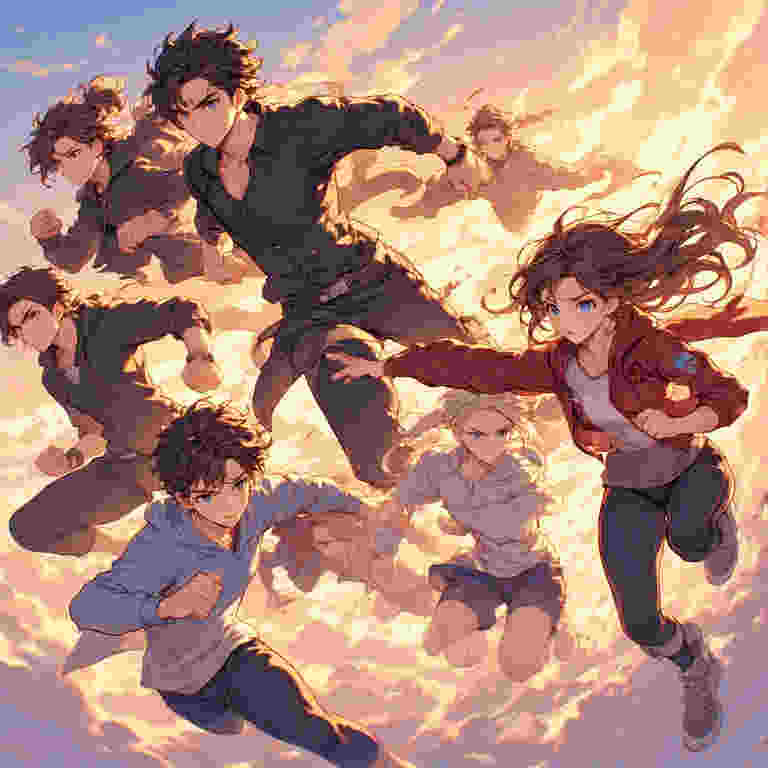

In the vast and diverse ecosystem of anime and manga, one genre stands as a cultural and commercial titan, shaping the childhoods and fandoms of millions around the world: Shonen. Translating literally to “boy” or “youth,” Shonen is far more than a simple demographic category aimed at teenage boys. It is a narrative philosophy, a genre of relentless optimism, and a powerful engine of character growth that has captured hearts across all ages and genders. Its journey from niche magazines to global mainstream dominance is a story of evolving themes, iconic creators, and the universal appeal of the human spirit striving for more.
Defining the Shonen Spirit: More Than Just Fighting
At its core, the Shonen genre is built upon foundational, aspirational pillars. It is less about a specific setting (though battles are common) and more about a central ethos:
- The Power of Perseverance (Ganbaru): The shonen protagonist is defined not by innate talent, but by indomitable will. They face impossible odds, fail repeatedly, and get back up through sheer grit and hard work. The message is clear: effort trumps genius.
- The Pursuit of a Dream: Every shonen hero has a clear, often audacious goal. Whether it’s becoming the Pirate King (One Piece), the Greatest Hero (My Hero Academia), or the #1 Volleyball Ace (Haikyu!!), this dream is the unwavering compass of the narrative.
- The Strength of Bonds (Nakama): Friendship and camaraderie are not subplots; they are the source of the hero’s true power. The found family—the crew, the squad, the team—provides emotional support, strategic strength, and the reason to fight. Protecting these bonds often becomes the highest stake.
- Continuous Growth and Rivalry: The journey is marked by visible progression, often through training arcs, skill acquisition, and power-ups. Rivals are not mere villains; they are foils and catalysts who push the protagonist to new heights, embodying a different path to strength.
- A Fundamental Sense of Justice: While morally complex stories exist, the shonen heart often beats with a clear sense of right and wrong. The hero fights to protect the innocent, stand up for the weak, and create a better world.
This formula provides a potent, emotionally resonant framework where the audience invests not just in what will happen, but in watching the protagonist earn it.
The Evolutionary March: How Shonen Conquered the World
The rise of shonen is inextricably linked to the history of Weekly Shonen Jump, the legendary magazine that became its primary incubator and amplifier since its 1968 launch.
The Foundational Era (1960s-70s): The Adventurer and the Underdog
Early hits established core templates. Astro Boy (Osamu Tezuka) presented a robot hero with a human heart, embedding themes of compassion. Dragon Ball (Akira Toriyama) began as a whimsical adventure inspired by Journey to the West before evolving into the blueprint for the modern battle shonen, with its power-scaling, transformations, and martial arts tournaments. Series like Ashita no Joe cemented the trope of the gritty underdog fighting against societal odds with relentless spirit.
The Golden Age Boom (1980s-90s): Refinement and Global Export
This era saw the genre explode in complexity and popularity, both in Japan and through early international broadcasts. Dragon Ball Z perfected the epic, saga-based battle narrative. Fist of the North Star brought a dystopian, hyper-masculine tragedy. Saint Seiya blended Greek mythology with flashy armor and brotherly bonds.
Crucially, this era also showcased shonen’s diversity. Slam Dunk made sports manga a phenomenon, proving the shonen ethos could thrive on a basketball court. Rurouni Kenshin layered historical drama and atonement onto its samurai action. Yu Yu Hakusho and Hunter x Hunter (Yoshihiro Togashi) introduced sophisticated power systems and psychological depth to battles. These series, often aired as anime on burgeoning TV networks worldwide, created the first global wave of shonen fandom.
The Modern Mainstream (2000s-Present): Deconstruction and Diversification
The new millennium saw shonen become self-aware and expand its boundaries while dominating global streaming.
- The “Big Three”: One Piece (adventure, world-building, unwavering dreams), Naruto (the outcast’s struggle for recognition), and Bleach (stylish supernatural action) defined a generation and flooded the internet with fandom, fanart, and discussion, solidifying shonen’s online dominance.
- Deconstruction and Depth: Series began playing with the formula’s own rules. Attack on Titan presented a world where simplistic heroism was impossible, draped in political and moral ambiguity. Jujutsu Kaisen embraced the classic battle structure but with a darker, horror-tinged aesthetic and a cynical protagonist.
- Genre Fusion and Inclusivity: Shonen now confidently absorbs other genres. Demon Slayer pairs a classic revenge quest with breathtaking, elemental artistry and a core theme of familial love. My Hero Academia is a superhero comic dressed in shonen principles, exploring what it truly means to be a hero. Chainsaw Man subverts expectations with visceral, chaotic action and deeply flawed, human characters driven by base desires. Spy x Family seamlessly blends action, comedy, and wholesome family dynamics, appealing to a broader audience.
- The Sports Renaissance: Haikyu!! and Kuroko’s Basketball reignited global love for sports shonen, focusing on hyper-realistic teamwork, strategy, and the pure love of the game.
The Engine of Popularity: Why Shonen Resonates Universally
Shonen’s global conquest isn’t an accident. Its pillars tap into universal human experiences:
- The Empowerment Fantasy: It offers a roadmap for self-improvement. The message that hard work, friendship, and never giving up lead to greatness is profoundly empowering, especially for a young audience.
- Clear Moral Clarity: In a complex world, the clear-cut battles of good versus evil (or more nuanced, personal ideals) provide satisfying narrative catharsis.
- The Addictive Progression Loop: The constant cycle of challenge, training, growth, and victory creates a compelling, binge-able rhythm that hooks viewers and readers.
- Community and Belonging: The emphasis on “nakama” mirrors the fan experience itself. Fans find their own community in fandoms, bonding over shared love for these stories of friendship.
- Accessible, High-Octane Excitement: At its surface, it delivers consistent, creatively staged action and spectacle—an easy entry point that then reveals deeper emotional layers.
Conclusion: The Ever-Evolving Spirit
Today, “shonen” is less a rigid box and more a vibrant, evolving storytelling language. It can contain the epic fantasy of Black Clover, the culinary battles of Food Wars!, the strategic death games of Kaiji, and the supernatural detective work of Moriarty the Patriot.
Its popularity endures because, at its best, it is about the most fundamental human struggles: to grow stronger, to protect what you love, to find your place, and to never, ever give up on your dream. It champions the heart over all else. As long as those themes resonate—and as long as creators continue to reinvent its expression within the pages of magazines and on streaming screens worldwide—the spirit of shonen will continue to be a dominant, inspiring force in global pop culture, reminding everyone, regardless of age or gender, of the power of a determined spirit.




Pingback: Dragon Ball vs One Piece : Comparison of Two Anime Giants – Akusaa.com discuss Anime, Gaming, and misc things
Pingback: Jujutsu Kaisen vs. Chainsaw Man: Comparing Two Modern Shonen Titans – Akusaa.com discuss Anime, Gaming, and misc things
Pingback: Quirks in MHA: How My Hero Academia Masterfully Balances Creativity with Narrative Cohesion – Akusaa.com discuss Anime, Gaming, and misc things