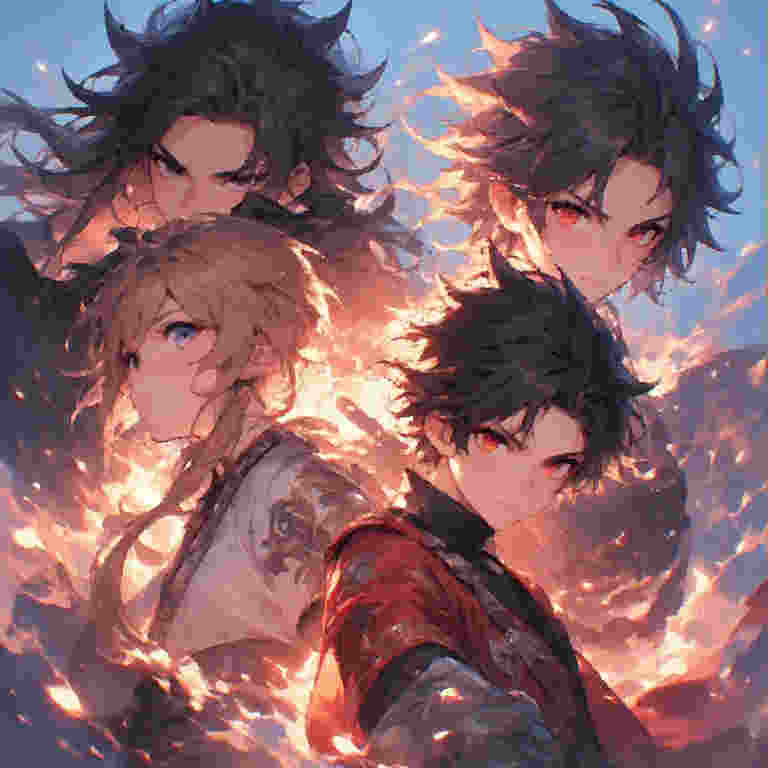

The hero stands at the heart of anime, a mirror reflecting the changing hopes, anxieties, and values of society—and a global audience—over decades. From god-like paragons to deeply flawed everymen, the journey of the anime protagonist is a fascinating history of storytelling itself. Let’s trace the evolution of the hero across anime’s defining eras.
The First Era & The Golden Age (1960s-1970s): The Invincible Paragon
In the formative years of TV anime, heroes were often unambiguous pillars of strength and morality, designed to inspire and rebuild a post-war nation.
- The Superhuman Symbol: Astro Boy (Tetsuwan Atom) (1963), created by the “God of Manga” Osamu Tezuka, established the template. Atom was a powerful robot with a child’s heart, a hero defined by his endless compassion and struggle for acceptance in a world fearful of his power. He was a symbol of progress and ethics.
- The Giant Hero: The 1970s introduced the Giant Robot Hero. Characters like Go Nagai’s Koji Kabuto (Mazinger Z) (1972) and Ryoma Nagare (Getter Robo) (1974) were hot-blooded, courageous pilots defending Earth from monstrous threats. Their heroism was direct, explosive, and rooted in defending the collective.
- The Noble Wanderer: Shows like Space Battleship Yamato (1974) and Lupin III (1971) offered different models. Captain Harlock (1978) and Kenshiro (Fist of the North Star) (1984) were anti-establishment wanderers, heroes of a broken world who operated by a personal, often melancholic, code of honor. They were strong, but their strength was tinged with tragedy.
The Bursting Bubble & New Waves (1980s): The Complex Human
As anime matured and budgets for theatrical films soared, heroes became more psychologically complex and narratively ambitious. It is said that this is a golden age for manga.
- The Reluctant and Traumatized Hero: The protagonists of the groundbreaking Mobile Suit Gundam (1979), especially Amuro Ray, were not born warriors. They were scared teenagers thrust into the machinery of war, their heroism a fraught mix of survival instinct, growing skill, and PTSD. This redefined the mecha genre.
- The Mythic and Philosophical Hero: Studio Ghibli’s rise gave us heroes like Nausicaä (1984), a pacifist princess and ecologist whose bravery was intellectual and empathetic. In film, Akira‘s Kaneda (1988) was a reckless biker caught in a psychic revolution, a powerless figure in the face of apocalyptic, god-like power.
- The Chosen One, Refined: This era also perfected the shonen “dream-chaser.” Son Goku (Dragon Ball) (1986) shifted from a whimsical adventurer to a pure-hearted warrior whose simple desire to test his limits defined a new kind of heroic drive: self-improvement for its own sake.
The Mainstream & Deconstruction Boom (1990s-2000s): The Doubted and The Dark
During anime’s global commercial explosion, heroes were increasingly scrutinized, deconstructed, and burdened with existential doubt.
- The Emotional and Doubting Hero: Shinji Ikari (Neon Genesis Evangelion) (1995) is the defining hero of this era—profoundly reluctant, crippled by anxiety, and forced to save a world he felt disconnected from. Heroism was framed as a traumatic, almost impossible burden.
- The Legacy Hero & The Outcast: Series like Rurouni Kenshin (1996) presented a hero, Kenshin Himura, actively atoning for a violent past, his pacifism a hard-won philosophy. Spike Spiegel (Cowboy Bebop) (1998) was a hero defined by style and fatalistic cool, running from a past that inevitably caught up.
- The Strategic Mind: The rise of the “brain over brawn” hero emerged with figures like Light Yagami (Death Note) (2006)—an anti-hero who believed himself a god of justice—and Lelouch vi Britannia (Code Geass) (2006), a tactician who used manipulation as his primary weapon. Heroism became intertwined with ideology and megalomania.
The Modern Landscape (2010s-Today): The Specialized & The Subversive
Today’s anime hero is not one archetype but many, often hyper-specialized within their genre, reflecting diverse audience tastes and global streaming.
- The Passionate Specialist: Modern shonen heroes often embody a singular, overwhelming passion. Deku (My Hero Academia) (2016) embodies the fan-turned-hero, all heart and analysis. Tanjiro Kamado (Demon Slayer) (2019) blends relentless kindness with a desperate, familial mission. Their power is secondary to their overwhelming empathy and work ethic.
- The Isekai Everyman: The explosion of isekai (another world) stories created the ordinary-guy-turned-hero. Characters like Kazuma (Konosuba) (2016) are cynical and lazy, while Rimuru Tempest (That Time I Got Reincarnated as a Slime) (2018) is a benevolent builder. Heroism is often administrative or comedic, a power fantasy of competence in a new world.
- The Deconstructed Legacy: Many modern shows actively play with past tropes. Mob (Mob Psycho 100) (2016) is an overpowered psychic whose real journey is emotional and social growth. Thorfinn (Vinland Saga) (2019) begins as a hero consumed by a vengeance so dark it completely inverts the warrior ideal, setting him on a path toward a radical new definition of strength.
- The Vulnerable & Relatable: There is a strong trend toward deeply human, struggling protagonists. Bocchi (Bocchi the Rock!) (2022) is a hero whose battle is against social anxiety, with the stage as her battlefield. Characters in shows like Jujutsu Kaisen (2020) or Chainsaw Man (2022) often face cosmic horrors with a blend of trauma, bravado, and flawed humanity.
Conclusion: From Symbol to Self
The history of the anime hero is a journey from the symbolic to the subjective. We have moved from the invincible, god-like Astro Boy—who represented an ideal—to characters like Shinji or Bocchi, who represent the internal struggles of the individual.
The hero’s quest has expanded from saving the world to saving oneself, one’s friends, or simply finding a place to belong. This evolution shows anime’s growing confidence in exploring the full spectrum of human experience, pointing that heroism isn’t just about the strength to destroy evil, but also the courage to face one’s own demons, the resilience to protect one’s found family, and the vulnerability to keep moving forward. The mask of the hero is no longer fixed; it is a mirror, and it reflects the watchers, us all.



Pingback: Demon Slayer vs. My Hero Academia vs. Hunter x Hunter (Anime Comparison) – Akusaa.com discuss Anime, Gaming, and misc things
Pingback: My Hero Academia sparks question : What It Truly Means to Be a Hero? – Akusaa.com discuss Anime, Gaming, and misc things
Pingback: The Legend of Mobile Suit Gundam: How Robot Anime Became Cultural Phenomenon – Akusaa.com discuss Anime, Gaming, and misc things