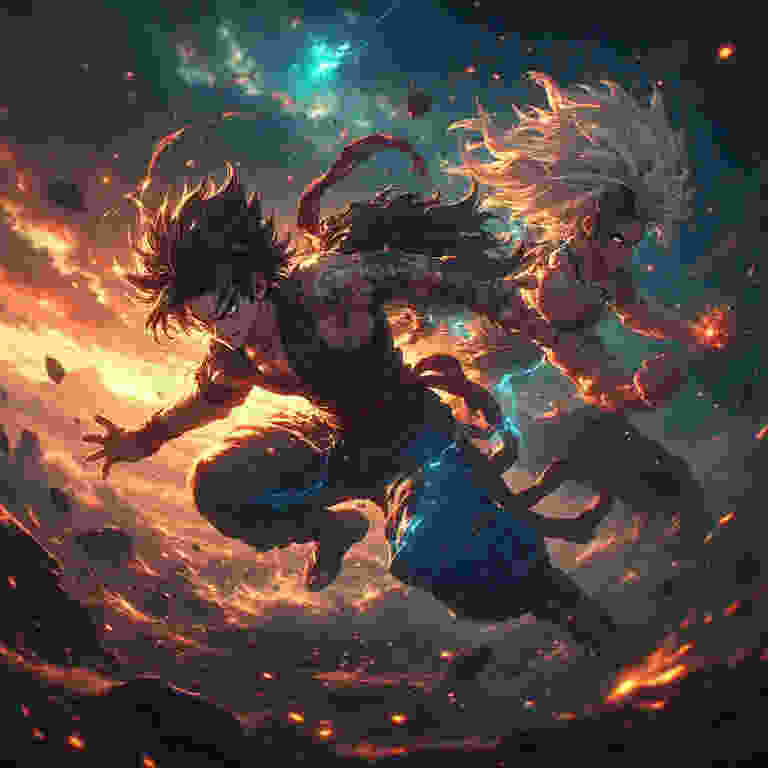

In the dynamic world of anime and manga, the action genre is the electric heartbeat, the primal spark that first captivated a global audience. It is more than a category; it is a fundamental language of kinetic expression, a symphony of motion where conflict, ambition, and power are resolved not through words, but through breathtaking choreography, strategic ingenuity, and sheer, overwhelming force. Its journey from simple pugilistic tales to the sophisticated, rule-bound, and philosophically charged narratives of today is a story of artistic evolution, technological advancement, and the universal appeal of the ultimate test of will.
Defining the Action Ethos: The Grammar of Conflict
At its core, the action genre prioritizes physical conflict and its resolution as the primary driver of narrative and character development. Its power lies not just in the spectacle, but in the specific tools and principles it employs:
- The Choreography of Clarity and Creativity: Action in this medium is not chaotic; it is orchestrated storytelling. Every punch, dodge, and energy blast conveys information. It establishes character (a precise swordsman vs. a wild brawler), power dynamics, and strategic intent. The best action sequences are visually readable narratives within the larger story.
- Power Systems as Narrative Architecture: A hallmark of anime/manga action is the codified power system. From Dragon Ball‘s Ki and Naruto‘s Chakra to Hunter x Hunter‘s Nen and Jujutsu Kaisen‘s Cursed Energy, these are not just sources of strength. They are rule-bound frameworks that turn fights into tactical puzzles. They create stakes, limitations, and a satisfying sense of progression and mastery for both character and viewer.
- The Thematic Stakes of Combat: Action is rarely violence for its own sake. It is the physical manifestation of ideological clash. A fight can represent a battle of philosophies (order vs. chaos, tradition vs. innovation, justice vs. vengeance), a test of personal resolve, or the struggle to protect a cherished ideal. The physical outcome carries profound narrative weight.
- The Spectrum of Scale: The genre masterfully operates at every level. It can be intensely personal—a duel of clashing swords in a narrow alley (Rurouni Kenshin)—or catastrophically epic, with combatants shattering landscapes and unleashing attacks that threaten continents (Attack on Titan, One Piece). This scalability allows it to serve both intimate character studies and world-altering epics.
- The Visual Language of Impact: Anime and manga have developed a unique vocabulary for motion. Speed lines, impact frames, dramatic perspective shifts, and hyper-stylized “attack callouts” are not mere embellishments. They are essential tools to convey velocity, force, and energy in a static or limited-animation medium, making the action feel visceral and immediate.
The Evolution of the Explosion: A Historical Journey
The Foundational Fists (1960s-70s): The Age of the Hero
Action anime began with simple, powerful archetypes. Astro Boy established the template of the powerful yet compassionate hero. The 1970s saw the rise of the “Hot-Blooded” hero in super robot shows like Mazinger Z, where action was direct, loud, and driven by righteous emotion. This era also gave birth to the gritty, martial arts-driven action of Street Fighter-inspired manga and the iconic Lupin III, blending heist action with stylish comedy.
The Revolution (1980s): The Shonen Jump Standard and Cinematic Ambition
This decade was transformative. Two pillars were erected:
- The Shonen Action Formula: Dragon Ball (Akira Toriyama) redefined everything. It synthesized martial arts tournaments, fantasy adventure, and ever-escalating power scales into a formula that prioritized training, transformation, and overwhelming spectacle. It established the “power creep” and the cathartic release of a new form as core shonen action tenets.
- The Cinematic Epic: On the big screen, Akira (Katsuhiro Otomo) and Mobile Suit Gundam (in its film compilations) presented action with unprecedented scale, political complexity, and apocalyptic consequences. This proved action could be a vehicle for serious, adult themes and sophisticated world-building.
The Diversification Boom (1990s): Genre Fusion and Psychological Depth
Action exploded into myriad sub-genres, each with its own flavor.
- The “Dark Shonen”: Berserk delivered medieval fantasy action of unparalleled brutality and psychological horror.
- The Strategic Renaissance: Yu Yu Hakusho and Hunter x Hunter (Yoshihiro Togashi) introduced action where strategy, rules, and intellect often trumped raw power, creating nail-biting tactical duels.
- The Cyberpunk Wave: Ghost in the Shell (Mamoru Oshii) fused philosophical inquiry with sleek, tactical gunplay and cyber-warfare, creating a more cerebral, tech-oriented action aesthetic.
The Modern Mainstream (2000s-Present): Refinement, Deconstruction, and Global Saturation
Action has become the dominant global export of anime, characterized by self-awareness and technical polish.
- The “Big Three” Era: Naruto, One Piece, and Bleach dominated the 2000s, perfecting the long-form shonen action model with distinct flavors: ninja fantasy, pirate adventure, and soul-reaper supernaturalism. They built vast worlds and power systems that fueled global fandom.
- The Deconstructionist Wave: Series began to interrogate the genre’s own tropes. Attack on Titan used its horrific, high-stakes action to explore cycles of violence and nationalism. One-Punch Man satirized superhero power fantasies while delivering impeccably animated fights.
- The Spectacle of Animation: Studios like ufotable (Demon Slayer, Fate) and MAPPA (Jujutsu Kaisen, Chainsaw Man) have raised the technical bar to staggering heights. Action is now a primary driver of visual artistry, with fights becoming fluid, expressive set-pieces that are major cultural events.
- Genre-Hybrid Dominance: Pure action is rare; it’s now the engine for other genres. My Hero Academia (superhero), Jujutsu Kaisen (supernatural horror), Chainsaw Man (surreal horror), and Spy x Family (comedy-thriller) all use expertly crafted action sequences to service their unique tones and themes.
The Engine of Excitement: Why Action Captivates the World
The genre’s unwavering, global popularity is rooted in fundamental human psychology and artistic appeal:
- The Pure Catharsis of Spectacle: Well-executed action provides an undeniable adrenaline rush and visceral satisfaction. It is kinetic entertainment at its most direct.
- The Empowerment Fantasy: It allows viewers to project themselves into scenarios of immense competence, resilience, and power—to imagine overcoming impossible odds through skill, will, or newfound strength.
- The Intellectual Thrill of Strategy: Modern action, with its rule-based systems, turns fights into live-action puzzles. Audiences engage not just emotionally, but intellectually, theorizing about power matchups and strategic choices.
- Character Revelation Under Pressure: As the saying goes, “Action is character.” In life-or-death struggles, a person’s true nature—their courage, loyalty, ingenuity, or trauma—is laid bare. Action is the ultimate crucible for development.
- A Universal Language: While dialogue and humor can be cultural-specific, the language of a well-choreographed fight—the tension, the clash, the triumph—transcends borders. It was the gateway for global anime fandom.
Conclusion: The Unending Innovation of Impact
The action genre in anime and manga has evolved from simple fisticuffs into a sophisticated, multifaceted art form. It is a canvas for exploring philosophy, a laboratory for inventing new rules of engagement, and a stage for some of the most breathtaking visual artistry in modern pop culture.
From the transformative auras of Dragon Ball to the cursed technique intricacies of Jujutsu Kaisen, from the weighty swordplay of Samurai Champloo to the chaotic ballet of Chainsaw Man, the genre continues to reinvent itself. Its popularity endures because it taps into a timeless human fascination with conflict, perseverance, and the sublime moment where motion becomes meaning. It proves that within the clash of fists, blades, and beams of energy, we can find not just excitement, but profound stories about what we fight for, what we fear, and what it means to be pushed beyond our limits. The action genre is the relentless, innovative spark that ensures anime and manga will always have the power to move us—literally and figuratively.




Pingback: How One Piece Rewards Long-Term Fans Without Excluding New Ones – Akusaa.com discuss Anime, Gaming, and misc things
Pingback: The Adventure Genre in Anime, Manga, and Its Enduring Voyage – Akusaa.com discuss Anime, Gaming, and misc things
Pingback: How to know which Anime genre to watch – Akusaa.com discuss Anime, Gaming, and misc things