

The War That Shaped the World: Unraveling the Great Pokémon War Theories Across the Regions
Beneath the cheerful surface of the Pokémon world—with its colorful creatures, friendly rivalries, and badges of honor—lies a shadow that has fascinated fans for decades. The theory of a Great Pokémon War, a catastrophic conflict that reshaped entire regions and erased generations, is perhaps the most enduring and emotionally resonant conspiracy in the franchise’s history. From Lt. Surge’s cryptic words in Vermilion City to the haunting emptiness of Orre’s deserts, players have pieced together a hidden history of loss, survival, and rebuilding. Here are the most compelling fan theories and conspiracies about the Great Pokémon War that supposedly touched every corner of the Pokémon world.
It has to be noted that a lot of these theories, interpretation, and data are unconfirmed and not guaranteed to be accurate.
See also : War in Pokémon? Conspiracy and Fan Theories
I. The Foundation: Lt. Surge and the Canon Clue
The entire edifice of the Great Pokémon War theory rests on a single, startling piece of dialogue from an unexpected source.
The Electric Veteran of Vermilion City
Before battling the player in Vermilion City’s Gym, Lt. Surge, the self-proclaimed “Lightning American,” delivers a line that has haunted fans for over two decades: “I tell you, kid, Electric Pokémon saved me during the war! They zapped my enemies into paralysis!”. This is not bravado or metaphor—it is a direct, unambiguous reference to a military conflict in which Pokémon were used as weapons of war.
The implications are staggering. Lt. Surge speaks of “enemies” being “zapped,” conjuring images of soldiers and their Pokémon partners fighting—and killing—together on battlefields. This single line transforms the friendly world of Pokémon battles into something far darker: a world where the creatures we love were once instruments of destruction.
The Timeline Question
When did this war occur? Most theorists place it roughly a decade before the events of Pokémon Red and Blue. This timing would mean that the player character’s generation—the children setting out on their journeys—were born either during or immediately after the conflict, a detail that would shape everything about their world.
II. The Demographic Void: Where Have All the Fathers Gone?
Perhaps the most emotionally resonant evidence for the Great War theory is what—and who—is missing from the Pokémon world.
The Missing Generation
Players have long noticed a strange demographic pattern across the Kanto region: the population consists almost entirely of children, elderly people, and adult women. Adult men of fighting age—those who would have been soldiers—are conspicuously absent. Where are the fathers? Where are the young husbands and brothers?
The theory provides a heartbreaking answer: they died in the war. The player character’s absent father, a detail so common it’s almost never remarked upon, suddenly becomes a casualty of history. Gary Oak, the rival raised solely by his grandfather Professor Oak, is likely an orphan whose parents never returned from the front lines.
The Veterans Who Remain
The few adult men who do appear in positions of authority—gym leaders, scientists, police officers, and members of villainous teams—may represent the survivors: those who were either too valuable to send to the front (scientists like Professor Oak), too skilled to die (veterans like Lt. Surge), or those who found purpose after the war in rebuilding society’s institutions.
III. Kanto: The Battlefield Region
As the setting of the original games and the home of Lt. Surge himself, Kanto is naturally the focus of the most detailed war theories.
The Professor Oak Conspiracy
If the war destroyed so much, why does Professor Oak seem to know so little about the Pokémon of his own region? The theory suggests a chilling answer: the knowledge was lost. All the research, all the data on Kanto’s 151 Pokémon species, was likely destroyed during the conflict. When Oak sends a young trainer out with an empty Pokédex, he is not launching a routine research project—he is undertaking a desperate effort to re-document species that may have been driven to the brink of extinction.
The Lavender Town Tragedy
Lavender Town, with its Pokémon Tower memorial, takes on new meaning in light of the war theory. This is not merely a place to mourn deceased pets—it is a mass grave and memorial for the Pokémon who died in the conflict. The ghosts that haunt the tower, including the Marowak whose spirit cannot rest, may be echoes of the war’s trauma. The presence of Team Rocket attempting to exploit these spirits for profit becomes even more grotesque against this backdrop.
The Cinnabar Island Explosion
The Pokémon Mansion on Cinnabar Island, where Mewtwo was created, holds another clue. Some theorists suggest that the explosion mentioned in the mansion’s journals was not an accident but the result of wartime bombing, and that the Mewtwo project itself may have been a military experiment to create the ultimate biological weapon.
IV. Johto: The Annexed Neighbor
The relationship between Kanto and Johto raises its own troubling questions about the war’s aftermath.
The Conquest Theory
In the Generation II games, Kanto and Johto share the same Elite Four and Pokémon Champion—a unique arrangement not seen in any other paired regions. Some theorists believe this is not a peaceful alliance but the result of Kanto’s conquest and annexation of Johto during or after the war. Johto, the smaller and more traditional region, may have been absorbed by its more powerful neighbor, its own league dissolved and replaced by Kanto’s authority.
The Burned Tower Connection
The Burned Tower in Ecruteak City, where the legendary Pokémon Ho-Oh and Lugia once roosted, is explicitly described as having been destroyed by lightning—but what if that was a cover story? Some fans speculate that the tower was actually destroyed during wartime bombing, and the legend of the three Pokémon who perished in the fire (later resurrected as Raikou, Entei, and Suicune) is a mythologized account of real creatures killed in the conflict.
V. Hoenn: The Environmental Wasteland
Hoenn’s dramatic landscapes and ecological themes may hide their own wartime secrets.
The Deserts of Hoenn
Parts of Hoenn, particularly the desert area near Route 111, seem strangely barren and inhospitable. Some theorists suggest this is not a natural formation but the result of wartime environmental devastation—perhaps from the same kinds of weapons that would later reduce Orre to a wasteland. The presence of fossils in the desert, normally found in mountains, could indicate a catastrophic event that reshaped the landscape.
Team Magma vs. Team Aqua
The conflict between Team Magma and Team Aqua, with their goals of expanding land or sea, takes on darker implications if the world has already been scarred by war. Perhaps these teams are not simply environmental extremists but factions seeking to restore territory lost during the conflict—land sunk beneath the waves or seas dried up by weaponized Pokémon.
VI. Sinnoh: The Mythological Cover-Up
Sinnoh, with its deep connection to legendary Pokémon and ancient myths, may hold the key to understanding the war’s true scale.
The Creation Trio as Weapons
Dialga, Palkia, and Giratina—the legendary Pokémon of time, space, and antimatter—possess power that could unmake reality itself. Some theorists believe these beings were not merely worshipped as gods but were actually deployed as weapons of mass destruction during the war. The myths surrounding them, in this interpretation, are not ancient history but relatively recent events, mythologized to hide the truth of their devastating use in combat.
Arceus: The Ultimate Deterrent
If the Creation Trio are weapons, then Arceus, the being said to have shaped the universe, would be the ultimate deterrent—a force so powerful that its very existence prevents total annihilation. The fact that Arceus is so rarely seen or mentioned may indicate a deliberate policy of keeping the ultimate weapon hidden.
The Canalave Library’s Missing Pages
The Canalave Library in Sinnoh contains extensive historical texts, but fans have noted that much of the region’s early history seems fragmentary or contradictory. Could this be because records were destroyed during the war, leaving only myths and legends to fill the gaps?.
VII. Unova: The American Front
Unova, rumored to be based on the New York City design, introduces its own wartime elements that may connect to the broader conflict.
The Name Itself
Some theorists note that “Unova” sounds like “unova” as in “new” or “unite”—perhaps a reference to a reunited nation after a devastating civil war. The region’s diverse geography, ranging from urban centers to deserts to forests, could reflect the aftermath of conflict.
The Plasma Connection
Team Plasma’s philosophy of separating humans and Pokémon, and its leader Ghetsis’s manipulation of N, may be rooted in the war’s trauma. If Pokémon were used as weapons of mass destruction, a movement advocating for their liberation from humans would find fertile ground. N himself, with his ability to understand Pokémon and his unnatural appearance, has been theorized to be a Zoroark in disguise—a Pokémon who experienced the war firsthand and seeks to prevent it from happening again.
The Pokémon World Tournament
The Pokémon World Tournament in Unova features gym leaders from multiple regions competing against each other. Some fans see this as a deliberate echo of the war—a peaceful, controlled outlet for the competitive and aggressive instincts that once drove nations to destroy each other.
VIII. Kalos: The Weapon of Last Resort
Kalos, based on France, introduces a concept that changes everything: the ultimate weapon.
The Ultimate Weapon
In Pokémon X and Y, the lore reveals that a terrible weapon was created 3,000 years ago, capable of destroying all life. While this is presented as ancient history, some theorists wonder: was it truly ancient, or is this another case of recent events being mythologized? The weapon’s description—capable of ending a war by killing everything—sounds terrifyingly like the nuclear option in a global conflict.
AZ’s Story
The tragic tale of AZ, the ancient king who used the ultimate weapon and was cursed with immortality, resonates powerfully with war theory. AZ lost his Pokémon in the war, built the weapon to revive it, and inadvertently caused mass death—a parable about how the desire to protect what we love can lead to terrible destruction. His continued presence in the modern day, still wandering Kalos, could represent the war’s trauma made flesh.
Team Flare’s Genocide Plan
Team Flare’s plan to destroy the world to create a beautiful new one takes on different meaning if the world has already been scarred by war. Perhaps Lysandre, who witnesses the beauty of Pokémon and humans working together, sees the war as proof that this partnership is doomed and seeks to end it entirely.
IX. Galar: The Militarized Region
Galar, based on the United Kingdom, presents a society organized around battle in ways that may reflect its wartime past.
The Gym Challenge as Military Training
The Galar region’s Gym Challenge is treated with the pageantry of a major sporting event, but its structure—a ladder of increasingly difficult battles culminating in a championship—bears a striking resemblance to military training and advancement. The fact that the Champion must defeat not only gym leaders but also a “tournament” of other trainers could reflect the training processes for elite military units.
The Darkest Day
Galar’s legendary event, the Darkest Day, involved Eternatus absorbing energy and causing chaos across the region. While presented as ancient history, some theorists see parallels to wartime destruction—a cataclysm that reshaped Galar’s society and led to the creation of the modern Gym system as a way to control and channel Pokémon power.
The Two Kings
Galar’s legend speaks of two heroes who defeated Eternatus and became the kings of sword and shield. Some fans interpret this as a mythologized account of two military leaders who saved the region during the war and established the dynasties that would later produce the region’s gym leaders.
X. Orre: The Nuclear Wasteland
Perhaps the most haunting evidence for the Great Pokémon War comes from a region rarely discussed in mainstream Pokémon games: Orre.
The Desert That Wasn’t Always Desert
Orre, the setting of Pokémon Colosseum and Pokémon XD: Gale of Darkness, is a barren, desert region where wild Pokémon are almost nonexistent. This is not how regions are supposed to look—every other region teems with life and grass and water. What happened to Orre?
The theory is devastating: Orre was hit by nuclear weapons during the war. The region that once had forests and cities and abundant Pokémon was reduced to desert by radiation. The few Pokémon that remain are either in the possession of trainers or hidden in small, isolated pockets.
The Under and Cipher’s Rise
Orre’s criminal organization, Cipher, operates from underground bases called “The Under”. Some theorists believe these are not criminal hideouts but actual bomb shelters from the war, repurposed by those who survived. The fact that Cipher specializes in creating “Shadow Pokémon”—creatures whose hearts have been closed to emotion, making them vicious and obedient fighters—takes on terrible significance: they are recreating the weapons of the war.
Why No Gym?
Orre has no Pokémon Gyms and no Elite Four. In a world where every other region has established these institutions, Orre’s lack of them speaks to its unique status. Perhaps the region was so devastated that it never recovered enough to establish a league. Perhaps its government collapsed entirely, leaving Orre in a state of anarchy. The constant crime and chaos of the region would then be not criminal activity but the natural state of a failed state.
XI. The Ranger Regions: Wars of Independence
The regions featured in the Pokémon Ranger games—Almia, Fiore, and Oblivia—may represent a different kind of conflict: wars of liberation.
The Ranger Rebellion
Some theorists propose that these regions were originally colonies of the major Pokémon nations (Kanto, Johto, Hoenn, and Sinnoh). During or after the Great War, the ranger populations—who had developed their own methods of connecting with Pokémon through capture stylers rather than Poké Balls—fought for and won their independence.
Almia’s Strategic Importance
Almia, with its advanced technology and crucial energy facilities, would have been a valuable strategic target during the war. Its successful breakaway from Sinnoh may have been made possible by the chaos of the larger conflict.
XII. The Post-War World: Rebuilding and Denial
If the Great Pokémon War happened, how did the world arrive at its current peaceful state?
The Gym System as Rehab
Some theorists propose that the modern Gym system is not a centuries-old tradition but a post-war invention designed to channel competitive instincts into harmless sport. By giving trainers a structured path to challenge and improve themselves, society prevented the kind of unchecked aggression that led to war. The badges, the leagues, the championships—all of it is a form of collective therapy.
The Pokédex Project
Professor Oak’s request to “complete the Pokédex” is, in this interpretation, a massive scientific undertaking to inventory surviving species and identify those lost to extinction. The player is not just a trainer but a census-taker, documenting what remains of the world’s Pokémon population after the devastation.
The Joy and Jenny Clones
The Nurse Joys and Officer Jennies—who appear in every region with identical faces and names—have long puzzled fans. The war theory offers a dark explanation: they are clones. Derived from a famously skilled battlefield nurse and a military policewoman, these clones were developed when the human population became critically low after the war. They are raised as families and trained through subconscious learning techniques to be perfect at their jobs, ensuring that every community has access to healing and protection.
The Conspiracy of Silence
Perhaps the most remarkable thing about the Great Pokémon War is how little it is discussed. Characters rarely mention it; history books are vague; the landscape shows few obvious scars. Some theorists believe this is deliberate—a global conspiracy of silence designed to protect children from the truth and prevent the trauma of war from being passed to the next generation. The researchers with tree-based names (Oak, Birch, Elm, Ivy) may be part of this conspiracy, their very names symbolizing their mission to help society grow anew from the ashes.
XIII. The Evidence That Haunts: Lingering Questions
Beyond the grand theories, small details continue to haunt players who look closely.
The Single Bed
In the player character’s house in Pallet Town, there is only one bed—shared by the protagonist and their mother. Where would a father sleep? The implication is heartbreaking: there is no father, and there never will be. His side of the bed is empty.
Blue’s Raticate
In Pokémon Red and Blue, the rival Blue uses a Raticate during the battle on the S.S. Anne, but it is never seen again. When the player next encounters Blue, he is in the Pokémon Tower—a graveyard. Some fans believe this is not a coincidence: Blue’s Raticate died in the battle on the ship, and he is visiting its grave.
The Ghosts of Lavender
The Pokémon Tower in Lavender Town contains the spirits of deceased Pokémon, including a Marowak killed by Team Rocket. But what of the other ghosts? Perhaps they are not all recent deaths. Perhaps some are veterans of the war, their spirits unable to rest.
The Missing Weapons
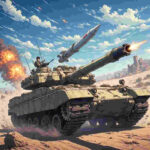
If Pokémon were used as weapons, where are the human weapons? Tanks, planes, guns—these are almost entirely absent from the Pokémon world. Some theorists suggest this is because the war was so devastating that society intentionally abandoned such technology, focusing entirely on Pokémon as partners rather than tools of destruction.
XIV. The Counterarguments: Holes in the Theory
No theory is without its detractors, and the Great Pokémon War theory has significant weaknesses.
The Lack of Physical Evidence
If a devastating war occurred, where are the ruins? The bomb craters? The memorials? The landscape of Kanto and Johto shows little evidence of large-scale destruction. Proponents counter that enough time has passed for rebuilding, and that locations like the Pokémon Tower and the Burned Tower are precisely such memorials.
The Silence
Why does almost no one talk about the war? Lt. Surge mentions it, but few others do. This could be explained by trauma and a desire to protect children, but it remains a significant hole in the theory.
The Children Trainers
If the world just emerged from a devastating war, why are children being sent out alone to catch dangerous creatures? This could be explained by necessity—society needs the data only they can collect—but it remains a point of contention.
See also: Fan Theories in Pokémon World, What is Fan Theory and Conspiracy Theory in Games and Anime
XV. Conclusion: The War We Never See
Whether the Great Pokémon War happened exactly as fans theorize, the persistence of these ideas speaks to something profound about the Pokémon world. Beneath its cheerful surface, players sense a depth, a history, a weight that the games only hint at. Lt. Surge’s throwaway line, the missing fathers, the demographic oddities, the wasteland of Orre—all of these details combine to create a shadow history that feels real, even if it is only imagined.
Perhaps that is the greatest achievement of the Pokémon games: they create a world so rich and detailed that fans can spend decades filling in its gaps, constructing elaborate histories to explain what the developers left unexplained. The Great Pokémon War may never be confirmed or denied by official sources. It exists in the space between what the games show and what players imagine—a war we never see, fought by soldiers we never meet, for reasons we never learn. Its legacy is the peaceful world we do see: a world of children and old people, of gym battles and Pokémon contests, of journeys and friendships and the quiet hope that the past will never repeat itself.
As one theorist put it, the Pokémon world may be a post-war society in the truest sense: not one that has forgotten war, but one that has chosen, collectively and deliberately, to build something better. The trainers who set out with their first Pokémon are not just beginning an adventure—they are continuing the work of rebuilding, one battle at a time.
So what you think of these theories or you have one to tell? Comment below!



Pingback: Marshadow Conspiracies and Fan Theories (Pokémon) – Akusaa.com discuss Anime, Gaming, and misc things
Pingback: Lucario Conspiracies and Fan Theories (Pokémon) – Akusaa.com discuss Anime, Gaming, and misc things