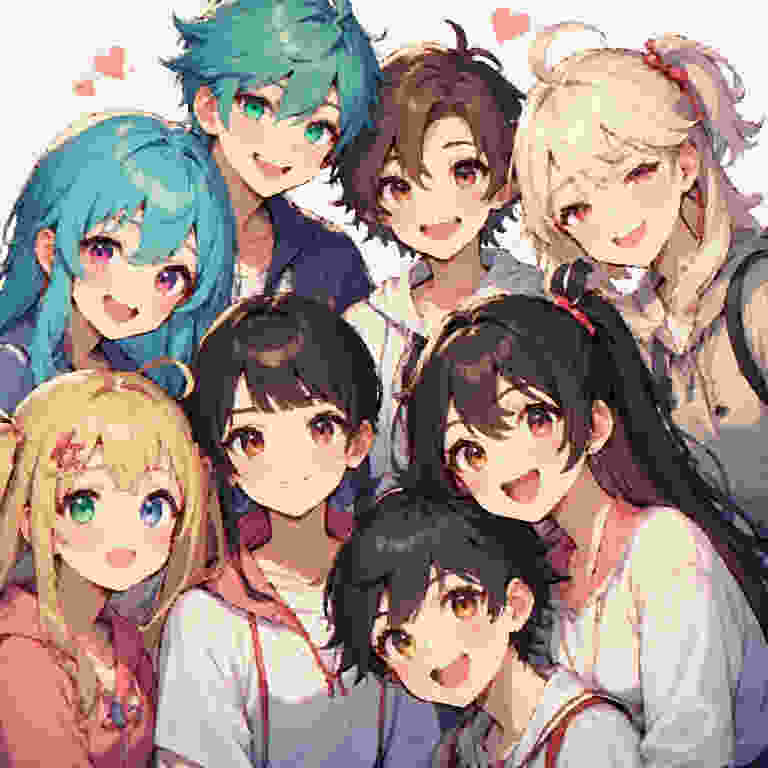

In the vibrant taxonomy of manga and anime, Shojo (meaning “young woman”) is not merely a demographic label but a rich, emotive universe of storytelling. Targeted primarily at girls and young women, Shojo is a genre defined by its deep focus on emotional interiority, relational dynamics, and personal transformation. Its narratives are compasses that guide readers through the complex landscapes of the heart, exploring love, identity, friendship, and self-discovery with a distinctive artistic and thematic sensitivity. From its post-war origins to its global, multi-platform dominance today, Shojo’s evolution mirrors the changing aspirations and voices of its audience.
Defining the Shojo Spirit: The Emotive Core
Shojo is less about a specific plot structure and more about a narrative priority and aesthetic sensibility. Its hallmarks include:
- The Primacy of Emotion and Interiority: The driving engine of a Shojo story is the character‘s internal world. The narrative meticulously charts the emotional journey—the flutter of first love, the ache of loneliness, the strength of friendship, the turmoil of self-doubt. The conflict is often psychological and relational rather than physical.
- Relationship-Centric Narratives: While romance is a prominent pillar, Shojo fundamentally explores all forms of deep connection. This includes intense friendships (sometimes romanticized as “Class S“), familial bonds, and the relationship one has with oneself. The development and healing of these connections form the core plot.
- Art as Emotional Language: Shojo art is renowned for its expressive, often decorative style. It uses visual metaphor to convey feeling: splash pages of flowers to represent blooming love, screentone clouds of sparkles for joy, ethereal, flowing backgrounds that melt away during moments of intense focus on a character’s expression. The characters themselves are often drawn with large, luminous eyes—windows to the soul—and elegant, detailed costumes.
- The Journey of Self-Discovery: The protagonist‘s arc is almost always one of personal growth. She (or sometimes he) learns to understand her own worth, find her voice, pursue a dream, or navigate societal expectations. The love story or friendship, if present, acts as a catalyst for this self-realization, not the ultimate replacement for it.
- Diversity of Sub-Genres: Within the umbrella, Shojo encompasses a vast range: pure romance, romantic comedy, fantasy, historical drama (“josei” is the more adult counterpart), magical girl, and even sports or music stories where the emotional journey is tied to a passion.
The Evolutionary Bloom: From Post-War Roots to Global Reach
The Foundation (1950s-60s): The “Mother of Shojo” and Early Pioneers
The modern Shojo manga was born in the post-war era with the “Year 24 Group” ( Fumi Yoshinaga, Moto Hagio, Keiko Takemiya, Ryoko Yamagishi). These women, born around Showa 24 (1949), revolutionized the genre. They moved beyond simple, gag-focused stories for girls into complex, literary territory. Moto Hagio’s The Poe Clan introduced Gothic romance and existential themes. Keiko Takemiya’s The Song of Wind and Trees tackled forbidden love and tragedy with unprecedented seriousness. They introduced androgynous, beautiful male characters and explored psychological depth, laying the artistic and thematic groundwork for everything that followed.
The Golden Age (1970s-80s): Refinement, Romance, and Magical Girls
This era saw Shojo solidify its popular formulas and achieve massive commercial success.
- The Romance Blueprint: Mitsuru Adachi’s Touch and H2, while often published in shonen magazines, perfected a gentle, sports-tinged romantic drama that influenced Shojo profoundly. Yukari Ichijo’s Yokiko’s Love epitomized the dramatic, emotional romance.
- The Magical Girl Transformation: Naoko Takeuchi’s Sailor Moon was a seismic event. It fused the magical girl trope with the superhero team, planetary mythology, and a central, epic romance. Its themes of female friendship, love, and cosmic destiny, wrapped in stunning art, defined a generation globally and expanded Shojo’s scope into action and fantasy.
- The Sweeping Historical Epic: Yoko Kamio’s Boys Over Flowers began in this era, becoming a landmark tale of class conflict and perseverance that spawned adaptations for decades.
The Modern Expansion (1990s-Present): Genre Fusion and Global Mainstreaming
Shojo has continually adapted, absorbing other genres and reaching a worldwide audience through anime and digital media.
- Fantasy and Supernatural Shojo: Series like Yuki Midorikawa’s Natsume’s Book of Friends blend supernatural elements with profound themes of loneliness, connection, and healing. Bisco Hatori’s Ouran High School Host Club deconstructed Shojo tropies through brilliant parody and heart.
- The Sports and Passion Shojo: Stories shifted focus from romance as the sole goal to a personal dream. Kyoko Hikawa’s From Me to You is a masterclass in shyness and friendship. **Ai Yazawa’s *Nana, while leaning josei, became a cultural phenomenon for its raw look at friendship, love, and ambition between two young women. **Arina Tanemura’s *Full Moon o Sagashite tied romance to a poignant career dream.
- The Global Streaming Phenomenon: The 2000s and 2010s saw Shojo anime become global staples via TV and streaming. Fruits Basket‘s 2019 reboot introduced a new generation to its deep tale of trauma and familial love. Yona of the Dawn offered a thrilling historical adventure with a transformative heroine. Kimi ni Todoke became the quintessential pure romance about overcoming social anxiety. My Love Story!! subverted expectations with a gentle giant protagonist.
- The Otome Game & Isekai Influence: The rise of “otome” (maiden) games and female-oriented isekai has created new sub-genres, like My Next Life as a Villainess: All Routes Lead to Doom!, which blends fantasy with romantic comedy tropes and self-aware humor.
The Engine of Resonance: Why Shojo Captivates
Shojo’s enduring and growing popularity, both in Japan and internationally, stems from its unique strengths:
- Emotional Validation: It treats the emotional lives of young women as serious, important, and worthy of epic storytelling. It validates feelings of love, insecurity, joy, and grief.
- The “Everygirl” and the Dream: Protagonists are often relatable—kind, sometimes clumsy, unsure of themselves. Their journeys from uncertainty to self-assuredness provide a powerful blueprint for personal growth.
- Artistic Escapism and Beauty: The lush, beautiful art style provides a form of visual wish-fulfillment and aesthetic pleasure, creating worlds that are emotionally and visually enchanting.
- Universal Themes of Connection: At its core, Shojo is about the human need to connect and be understood. This theme transcends gender and culture, attracting a diverse audience who craves stories about emotional truth.
- Evolution with the Audience: As its original readers aged, Shojo matured. The creation of Josei as a category and the increasing complexity of modern Shojo show the genre’s ability to grow with its fans, addressing adult concerns while retaining its emotional core.
Conclusion: More Than Just Romance
Shojo is said to be a genre of emotional intelligence. It is a space where the intricate map of the human heart is drawn with careful detail, where the victory isn’t always about conquering an external foe, but about understanding oneself and forging bonds that heal and strengthen.
From the revolutionary pages of the Year 24 Group to the sparkling screens showcasing Sailor Moon or the tender moments of Fruits Basket, Shojo has consistently offered a vital counter-narrative: that strength is found in vulnerability, that love is a transformative force, and that the most compelling journey is the one that leads a character home to their own heart. Its popularity is a testament to a timeless, global appetite for stories that don’t just show us action, but make us feel—deeply, authentically, and transformatively. In a world that often prizes stoicism, Shojo remains a brave, beautiful, and profoundly popular celebration of feeling.