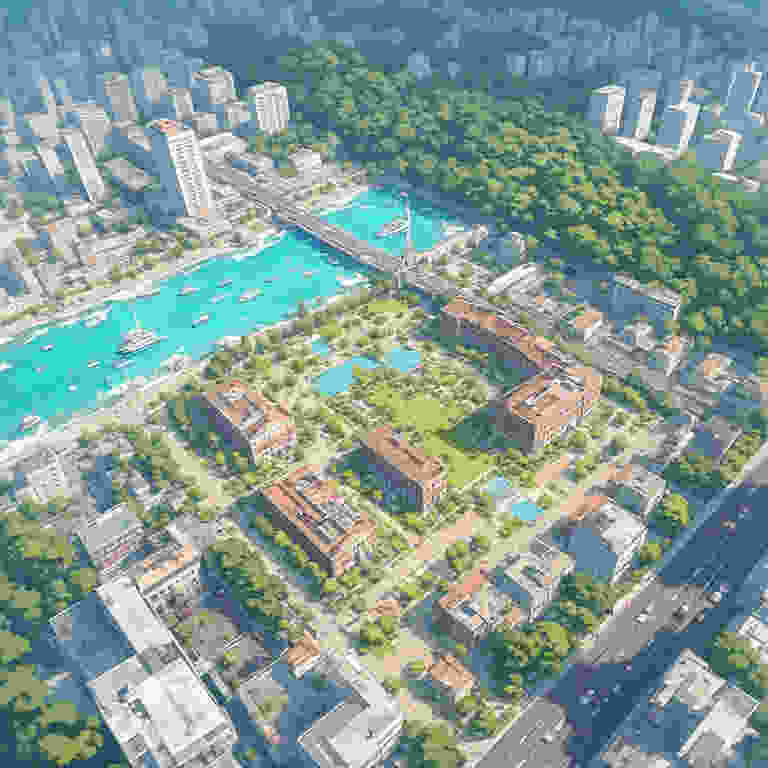

The sandbox genre represents the zenith of player freedom and emergent gameplay. At its heart, a sandbox game provides a curated set of systems, tools, and a world, then steps back to let the player define their own objectives and create their own fun. It’s less about following a pre-written narrative and more about authoring a personal story through interaction with a dynamic, often physics-driven, environment.
The term “sandbox” evokes the spirit of a child’s playground: the box and the sand are provided, but what you build, destroy, or imagine is up to you.
The Core Philosophy: Freedom & Emergence
Sandbox games are built on foundational principles that prioritize player agency:
- Player as Author: The primary narrative is not scripted by the developer but emerges from the player’s actions, experiments, and goals. You set your own purpose.
- Systemic Gameplay: The world operates on a set of consistent, interacting rules (physics, chemistry, AI behavior, ecology). The magic happens when these systems collide in unexpected ways, creating unscripted, memorable moments.
- Open-Ended Tools & Mechanics: Players are given versatile tools—be it a gravity gun, a physics engine, building blocks, or complex AI editors—that can be used in multiple, creative ways to solve problems or create chaos.
- Non-Linear Exploration: The world is often open and persistent, rewarding curiosity. Progress is gated by player ingenuity and understanding of the game’s systems, not by story milestones.
The Landscape of Play: Key Variations
The sandbox concept is a core design philosophy that blends with other genres:
- Creative & Building Sandboxes: The purest form, focused on construction and creation. Minecraft is the definitive example, offering near-infinite blocks to build anything imaginable. Garry’s Mod provides a “physics playground” with endless user-created tools and mods. Terratech and Scrap Mechanic focus on building functional vehicles and machines.
- Systemic World Simulators: These games simulate complex, interacting systems to create believable, reactive worlds. The Grand Theft Auto series, especially from IV onward, uses its “RAGE” engine to create a living city where traffic, police, and pedestrian AI react to the player’s chaos. Red Dead Redemption 2 adds layers of animal ecology and nuanced NPC routines.
- Emergent Narrative Sandboxes: Games that use sandbox mechanics to generate unique personal stories. The Elder Scrolls V: Skyrim allows players to ignore the main quest entirely and become a hunter, alchemist, or property owner, with the world reacting to those choices. Kenshi and RimWorld are brutal, systemic stories of survival and faction dynamics entirely built by the player’s actions.
- Physics & Toybox Sandboxes: Games where the core joy is manipulating the rules of the game world itself. The Just Cause series gives players a grappling hook, wingsuit, and explosives to creatively dismantle a dictatorship. Teardown is built entirely around voxel-based destruction and creative problem-solving.
- Management & God Game Sandboxes: Here, you shape a world or society from a macro perspective. The classic SimCity, RollerCoaster Tycoon, and modern titles like Cities: Skylines give you the tools to build and manage a complex system, then watch it succeed or fail based on your decisions.
The Rise of the Sandbox: From Niche Experiment to Dominant Design
The sandbox genre’s journey to becoming a cornerstone of modern game design is a story of technological empowerment, cultural shifts in play, and the influence of user-generated content.
1. The Early Foundations: Text and Simple Sims
The spirit of the sandbox existed in early text adventures like Zork and Colossal Cave Adventure, which offered open-ended exploration. The true pioneers, however, were simulation games. Elite (1984) created a vast, open galaxy for trading and combat, while SimCity (1989) gave players god-like control over urban planning, proving that a game could be compelling without a win condition.
2. The 3D Breakthrough: The Living City
The leap to 3D was transformative for the sandbox. Grand Theft Auto III didn’t invent the open world, but it perfected the living open world. Its “third-person, do-anything” model in a reactive, dense urban environment became a template for a generation. It demonstrated that a sandbox could be both a chaotic toy and a rich setting for narrative, appealing to a massive mainstream audience.
3. The Modding Catalyst: Player as Co-Creator
Games like Grand Theft Auto: Vice City, The Elder Scrolls III: Morrowind, and especially Garry’s Mod tapped into a powerful force: the creativity of the player base. By providing powerful editing tools or simply being open to modification, these games extended their lifespan infinitely. The most popular sandboxes became platforms for entirely new experiences, fostering incredibly dedicated communities and proving that user-generated content was a key to longevity.
4. The Minecraft Revolution: The Ultimate Creative Tool
No game democratized the sandbox genre more than Minecraft. Its simple, block-based building system was instantly understandable, infinitely scalable, and accessible to all ages. It shifted the focus from consumption to creation on a monumental scale, making every player an architect, engineer, or adventurer in their own right. Its success proved that a sandbox could be a global cultural phenomenon.
See also : Beginner’s Guide to Minecraft
5. The Systemic Depth Evolution
Modern sandboxes have focused on deepening the systemic “life” of their worlds. Red Dead Redemption 2 is a landmark, with its intricate AI routines for wildlife and NPCs that remember your actions. Breath of the Wild and Tears of the Kingdom redefined open-world adventure by making the world itself a physics-based puzzle box, where every system (fire, wind, electricity, magnetism) can be interacted with and combined by the player.
6. The Streaming & Sharing Era
The rise of YouTube and Twitch is perfectly suited to sandbox games. Their emergent, unscripted nature creates perfect shareable content: incredible builds, catastrophic failures, and hilarious systemic glitches. Watching someone master the systems of Kerbal Space Program or create a working computer in Minecraft is entertainment in itself. This visibility has fueled the genre’s popularity, inspiring others to jump in and create their own stories.
In Conclusion
The sandbox genre’s popularity is a testament to the human desire for play, creation, and agency. It offers a unique form of empowerment, placing the tools of creation and destruction in the player’s hands and asking, “What will you do?” It fulfills the fantasy of not just inhabiting a world, but shaping it.
From the sprawling, chaotic streets of Grand Theft Auto V to the serene, blocky vistas of Minecraft, from the intricate machine-building of Garry’s Mod to the systemic wilderness survival of The Legend of Zelda: Breath of the Wild, sandbox games thrive because they trust the player to find their own fun. They are not just games; they are digital playgrounds, laboratories for experimentation, and canvases for imagination, proving that the most compelling story is often the one you write for yourself.




Pingback: A Beginner’s Guide to Starting the Grand Theft Auto Series: Your Keys to the Open World – Akusaa.com discuss Anime, Gaming, and misc things