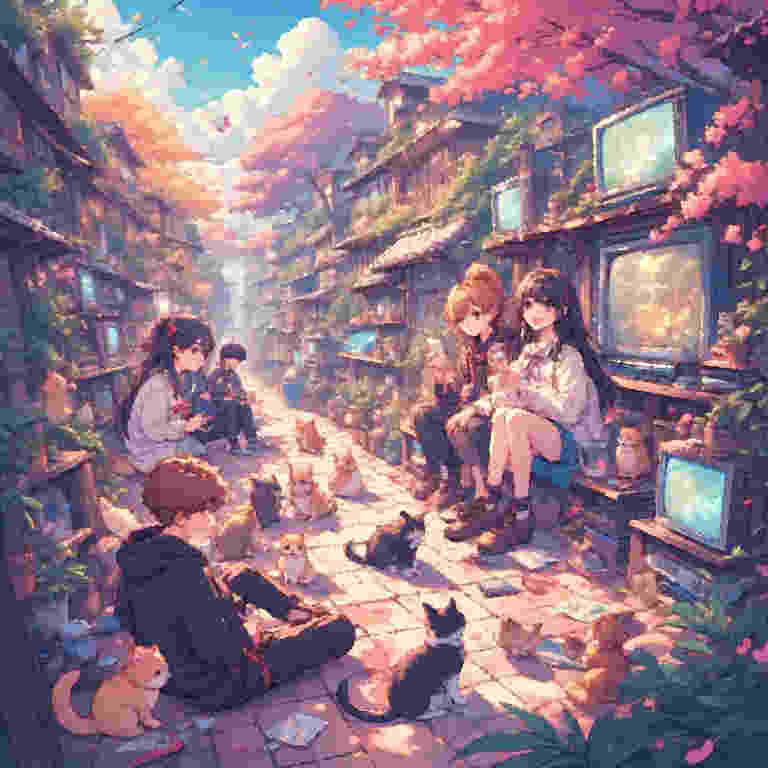

Japanese storytelling has conquered global entertainment communities through three distinct but interconnected mediums: manga, anime, and light novels. While they often share stories, characters, and universes, each medium offers unique strengths, experiences, and connections with audiences. Understanding the differences between these forms, their respective advantages and limitations, and how they contribute to both entertainment and personal growth reveals why millions worldwide have embraced these art forms and how each serves different needs and preferences.
Defining the Three Mediums
Manga: Sequential Visual Storytelling
Manga refers to Japanese comics or graphic novels, typically printed in black and white and read from right to left (the opposite of Western comics). Manga encompasses every genre imaginable—action, romance, comedy, horror, slice of life, sports, mystery, and countless combinations.
The manga industry in Japan is enormous, with weekly and monthly magazines publishing multiple series simultaneously. Popular manga sell millions of copies, and successful series can run for years or even decades. Works like “One Piece” by Eiichiro Oda have been serialized since 1997 and continue today, spanning over a thousand chapters.
Manga originated in post-war Japan but has roots stretching back centuries to traditional Japanese art forms. Artists like Osamu Tezuka, often called the “God of Manga,” established many conventions still used today, including the distinctive large-eyed character designs and cinematic panel layouts.
Anime: Animated Visual Storytelling
Anime refers to Japanese animation, encompassing television series, films, OVAs (original video animations), and web series. Like manga, anime covers every genre and demographic, from children’s programming to mature psychological thrillers.
Anime can be original creations or adaptations of manga, light novels, visual novels, or games. The medium allows for movement, voice acting, music, and color that manga cannot provide, creating immersive audiovisual experiences.
The anime industry has grown into a global phenomenon. Series like “Attack on Titan,” “Demon Slayer,” “My Hero Academia,” and “Jujutsu Kaisen” attract massive international audiences. Studio Ghibli films like “Spirited Away” and “Princess Mononoke” have achieved critical acclaim and mainstream success even among audiences unfamiliar with Japanese animation.
Anime ranges from low-budget productions to theatrical films with stunning animation quality. Different studios have distinct visual styles—Studio Ghibli’s painterly backgrounds, Kyoto Animation’s detailed character animation, or Ufotable’s digital effects integration each create recognizable aesthetics.
Light Novels: Text-Based Storytelling with Illustrations
Light novels are Japanese young adult novels, typically shorter than traditional novels (around 50,000 words) and featuring anime-style illustrations throughout. They’re called “light” not because of content but because they’re designed for quick, accessible reading.
Light novels emerged in the 1970s but exploded in popularity during the 1990s and 2000s. They often explore fantastical premises, isekai (transported to another world) scenarios, school life with supernatural elements, or science fiction concepts.
Notable light novel series include “Sword Art Online,” “Re:Zero,” “The Melancholy of Haruhi Suzumiya,” “Overlord,” “Konosuba,” and “Spice and Wolf.” Many successful anime originate from light novels, though light novels remain less familiar to Western audiences than manga or anime.
Light novels typically release in serialized volumes, with popular series spanning dozens of volumes. Publishers often include color illustrations at the beginning and black-and-white illustrations throughout, creating a hybrid text-and-visual experience.
The Reading/Viewing Experience
Each medium creates fundamentally different consumption experiences.
Manga: Reader-Controlled Pacing
Reading manga gives complete control over pacing. You can slow down during action sequences to appreciate artwork detail, speed through dialogue you’ve absorbed quickly, or pause to study a particularly beautiful or complex panel. This self-directed pacing allows deep engagement with artwork.
Manga excels at visual storytelling through panel composition, character expressions, and action flow. Master manga artists convey emotion, movement, and atmosphere through purely visual means. The layouts guide eye movement, creating rhythm and emphasis that skilled readers internalize.
However, manga requires active imagination for voices, music, and movement. Readers must mentally animate action sequences and imagine how dialogue sounds. This engagement can be rewarding but demands more effort than passive anime viewing.
The physical act of reading manga—holding a volume, turning pages—creates a tactile connection some readers value. Digital manga offers convenience but loses this physical dimension.
Anime: Passive Immersion
Anime provides a complete audiovisual package. Voice acting brings characters to life with emotional performances that add dimensions beyond what text or static images convey. Background music enhances mood—a tense scene becomes more gripping with the right soundtrack, a touching moment more emotional with appropriate music.
Animation adds movement, timing, and visual effects impossible in static media. Fight scenes in anime like “Demon Slayer” or “Mob Psycho 100” showcase fluid motion, impact, and spectacle that manga can suggest but not fully replicate.
However, anime removes pacing control. You consume at the director’s chosen speed, unable to linger on scenes or rush past others. This fixed pacing works beautifully when well-executed but can feel slow during exposition or rushed during action if not properly balanced.
Anime requires dedicated viewing time and attention. You can’t easily pause for extended periods without losing immersion. The time commitment per episode (typically 20-24 minutes) is fixed, unlike manga where you might read a chapter in five minutes or thirty depending on your pace.
Light Novels: Imaginative Depth
Light novels provide the most detailed internal monologue and world-building through prose. They can explore character thoughts, describe settings, and explain complex systems with specificity that visual media struggle to match without awkward exposition.
The reading experience resembles traditional novels but with occasional illustrations that provide visual references for characters and key scenes. These illustrations help readers visualize while still exercising imagination for most details.
Light novels allow the deepest dive into character psychology. Inner thoughts, motivations, and reasoning unfold in ways that manga’s limited text space and anime’s time constraints often compress or simplify. Series like “The Irregular at Magic High School” include detailed explanations of magic systems that adaptations must abbreviate.
However, light novels require the most active engagement. Without visuals or audio, readers must imagine everything—character voices, action choreography, environmental details. For some, this imaginative freedom is liberating; for others, it’s more demanding than they prefer for entertainment.
Strengths and Weaknesses
Manga Strengths
Artistic Expression: Manga artists have complete visual control, creating distinctive styles that define their work. The artwork in “Vagabond” by Takehiko Inoue is breathtaking in ways adaptations cannot fully capture.
Pacing Control: Readers dictate their own pace, rereading favorite scenes or studying artwork without time pressure.
No Filler: Manga typically avoids the filler episodes anime sometimes needs when catching up to source material. The story progresses at the author’s intended pace.
Accessibility: Manga volumes are relatively affordable and portable. You can read anywhere without screens or audio.
Complete Stories: Many manga run their full course to completion, providing satisfying endings. Anime adaptations often conclude mid-story or diverge from manga endings.
Visual Storytelling Innovation: Manga can experiment with panel layouts, visual metaphors, and artistic techniques in ways that push storytelling boundaries.
Manga Weaknesses
No Animation: Action sequences, while well-drawn, lack actual movement. Complex fights can be hard to follow.
No Voice or Music: Characters have no voices, and scenes have no soundtracks. The experience is less immersive than anime.
Black and White: Most manga are monochrome, losing the impact of color in character designs and environments (though some series release color versions).
Availability: Official English manga translations sometimes lag behind Japanese releases, and not all series are translated.
Reading Direction: The right-to-left reading direction can initially confuse Western readers, though most adapt quickly.
Anime Strengths
Complete Sensory Experience: Voice acting, music, color, and animation create fully realized worlds that engage multiple senses.
Accessibility for Non-Readers: People who struggle with reading or prefer visual learning can enjoy complex stories through anime.
Epic Scale: Large-scale battles, magical effects, and sweeping landscapes achieve visual grandeur through animation. The climactic fights in “Attack on Titan” or the magical battles in “Fate/Stay Night” leverage animation’s full potential.
Cultural Gateway: Anime introduces Japanese culture, language, and perspectives to international audiences in accessible formats.
Emotional Impact: Voice performances and musical scores can elevate emotional moments beyond what static images achieve. The soundtrack to “Your Lie in April” enhances its emotional resonance tremendously.
Collective Experience: Anime can be watched together, creating shared experiences and discussions that solitary manga reading doesn’t provide as easily.
Anime Weaknesses
Adaptation Constraints: Anime must compress or omit material from source works, sometimes losing characterization or plot details.
Censorship and Changes: Content inappropriate for television gets censored or altered. Streaming releases might restore content, but broadcast versions face restrictions.
Production Delays: Anime production can suffer from scheduling issues, budget constraints, or studio problems that affect quality. Some episodes may have noticeably lower animation quality.
Incomplete Adaptations: Many anime adapt only portions of source material, ending on cliffhangers or without proper conclusions when additional seasons aren’t greenlit.
Filler Content: Long-running anime sometimes include filler episodes to avoid overtaking source material, frustrating viewers seeking story progression.
Fixed Pacing: You cannot control viewing speed, and pacing issues in adaptation can make episodes feel slow or rushed.
Light Novel Strengths
Narrative Depth: Prose allows for detailed world-building, complex magic systems, political intrigue, and thorough character development that visual media often simplify.
Internal Perspective: Direct access to character thoughts provides understanding of motivations and reasoning that adaptations must convey through dialogue or visual cues.
Imagination Freedom: Readers visualize characters and scenes according to personal imagination, creating unique mental versions of the story.
Complete Stories: Like manga, light novel series typically complete their narratives. Readers can experience full stories without waiting for adaptations.
Rapid Releases: Light novel volumes often release faster than manga volumes or anime seasons, allowing quicker story progression.
Detail and Explanation: Complex concepts, whether magical systems or political structures, can be explained thoroughly without feeling like exposition dumps.
Light Novel Weaknesses
Limited Illustrations: While illustrated, light novels provide far fewer visual references than manga, requiring more imagination from readers.
Translation Challenges: Translating Japanese novels while preserving style, cultural references, and wordplay is challenging. Some nuance inevitably gets lost.
Less Visual Appeal: Without consistent artwork, light novels attract fewer readers who prefer visual storytelling.
Difficult Action Sequences: Fight scenes described in text can be hard to visualize, especially complex multi-person battles or magical combat.
Availability: Fewer light novels receive official English translations compared to manga or anime, limiting access for non-Japanese readers.
Variable Writing Quality: Writing quality varies significantly between authors, and translation quality adds another variable.
The Adaptation Relationship
These three mediums exist in complex relationships, frequently adapting each other’s stories.
Manga to Anime
The most common adaptation path runs from manga to anime. Successful manga often receive anime adaptations that introduce stories to broader audiences. “Fullmetal Alchemist,” “Naruto,” “Death Note,” and “Dragon Ball” all began as manga before becoming anime phenomena.
Anime adaptations may face the challenge of pacing manga content—too slow and viewers get bored with dragging scenes; too fast and important details get lost. “One Piece” is often criticized for slow pacing in later arcs, while “Tokyo Ghoul” faced criticism for rushing through content. However, many people find anime versions uniquely fascinating.
Some adaptations diverge from source material, either creating original endings (when manga is ongoing) or making creative changes. “Fullmetal Alchemist” (2003) diverged significantly from the manga, while “Fullmetal Alchemist: Brotherhood” (2009) faithfully adapted the complete story.
Light Novel to Anime
Light novel adaptations have become increasingly common, especially for isekai and fantasy series. “Sword Art Online,” “Re:Zero,” “Overlord,” and “The Rising of the Shield Hero” brought light novel stories to audiences who might never read the source material.
These adaptations may face unique challenges. Light novels often include extensive internal monologue and detailed explanations that don’t translate smoothly to visual media. Adaptations must convert introspection into dialogue, visual metaphors, or narrator commentary.
Many light novel adaptations receive criticism from source readers for cutting content or simplifying complexity. However, anime adaptations also serve as advertisements for light novels in a good way, often boosting popularity significantly.
Anime to Manga
Less common but existing, some original anime receive manga adaptations that expand the story, explore side characters, or retell events from different perspectives. “Code Geass,” “Neon Genesis Evangelion,” and “Gurren Lagann” all have manga versions that offer alternative takes on the stories.
Cross-Media Franchises
Major franchises often exist across all three mediums simultaneously, sometimes with different canonical storylines. “Fate/Stay Night” originated as a visual novel, received manga adaptations, spawned multiple anime series, and inspired light novels—creating a sprawling multimedia universe.
Demographics and Target Audiences
Japanese publishing categorizes manga and light novels by demographic more explicitly than Western media.
Shonen
Shonen (boys) manga and anime target younger male audiences with action, adventure, and coming-of-age themes. “Dragon Ball,” “Naruto,” “One Piece,” “Bleach,” and “My Hero Academia” exemplify the category. These works typically feature male protagonists growing stronger through training and friendship, facing increasingly powerful opponents.
However, shonen appeals well beyond its target demographic. Female fans and adult readers/viewers enjoy these series in large numbers, attracted by compelling characters, exciting action, and themes of perseverance and friendship.
Shojo
Shojo (girls) manga and anime target younger female audiences, often emphasizing romance, relationships, and emotional growth. “Sailor Moon,” “Fruits Basket,” “Ouran High School Host Club,” and “Kimi ni Todoke” represent the category.
Like shonen, shojo attracts audiences beyond its demographic. The artistic beauty, character development, and emotional depth appeal to readers/viewers of all genders and ages.
Seinen
Seinen (young men) manga and anime target adult male audiences with more mature themes, complex narratives, and sophisticated content. “Berserk,” “Vinland Saga,” “Monster,” “Tokyo Ghoul,” and “Parasyte” exemplify seinen works.
These series often explore darker themes, moral ambiguity, psychological complexity, and graphic content unsuitable for younger audiences. The storytelling tends toward realism and complexity over the more idealized narratives common in shonen.
Josei
Josei (women) manga and anime target adult female audiences, often focusing on realistic romance, workplace drama, and adult life challenges. “Nana,” “Paradise Kiss,” “Nodame Cantabile,” and “Princess Jellyfish” represent this category.
Josei works explore mature relationships, career struggles, and life decisions with depth and realism, contrasting with shojo’s often idealized portrayals.
Kodomo
Kodomo (children) works target young children with simple stories, bright visuals, and clear moral lessons. “Doraemon,” “Pokemon,” and “Anpanman” serve this audience.
Genre Diversity and Specialization
All three mediums encompass remarkable genre diversity, with some genres particularly suited to specific mediums.
Action and Battle Series
Action-oriented stories appear across all mediums but shine differently in each. Manga like “Dragon Ball” or “One Piece” excel at choreographing fights through panel layouts and dramatic compositions. Anime brings those fights to life with fluid motion and impact. Light novels describe battle strategies and inner thoughts during combat that visual media often streamline.
Slice of Life
Slice of life stories focusing on everyday experiences thrive in all three mediums. Manga like “Yotsuba&!” capture quiet moments beautifully. Anime like “K-On!” or “Laid-Back Camp” create relaxing atmospheres through animation and music. Light novels explore characters’ inner lives and small observations in detail.
Isekai and Fantasy
The isekai (transported to another world) genre has exploded particularly in light novels, with series like “Re:Zero,” “Overlord,” “That Time I Got Reincarnated as a Slime,” and “The Rising of the Shield Hero” achieving massive popularity. Light novels’ prose format allows detailed explanation of game-like systems, magic mechanics, and world-building that these stories often feature.
Romance and Drama
Romance works across all mediums but emphasizes different elements. Manga romance like “Kaguya-sama: Love is War” uses visual comedy and character expressions masterfully. Anime romance benefits from voice acting chemistry and musical enhancement. Light novel romance dives deeply into characters’ thoughts and feelings.
Horror and Psychological Thriller
Horror manga like “Uzumaki” by Junji Ito or “The Promised Neverland” use visual artistry to create disturbing imagery. Horror anime adds sound design and animation for atmosphere. Psychological thriller light novels explore characters’ deteriorating mental states through internal narration.
Sports
Sports manga and anime have created some of the medium’s most beloved works—”Haikyuu!!” for volleyball, “Slam Dunk” for basketball, “Hajime no Ippo” for boxing. These works use their mediums’ strengths to make sports exciting even for readers/viewers unfamiliar with the sport.
Cultural and Educational Value
Beyond entertainment, these mediums offer cultural education and learning opportunities.
Japanese Language Learning
Many people use manga, anime, and light novels to learn Japanese. Manga provides visual context for vocabulary, anime offers listening practice with varied speaking styles, and light novels build reading comprehension. Learners often start with simple series and gradually tackle more complex works.
The repetitive nature of catchphrases in shonen anime, the clear enunciation in educational anime, and the furigana (pronunciation guides) in manga all support language learning. Many learners credit their Japanese proficiency to countless hours with these media.
Cultural Understanding
These mediums introduce Japanese customs, values, social norms, and daily life. Slice-of-life series showcase school culture, food, festivals, and traditions. Historical manga and anime like “Rurouni Kenshin” or “Vinland Saga” explore Japanese and world history.
Understanding honorifics, social hierarchies, and communication styles through these media builds cultural awareness. Viewers learn about Japanese holidays, food culture, urban and rural life, and social expectations through stories set in Japan.
Artistic Appreciation
Manga and anime expose audiences to distinctive artistic styles, visual storytelling techniques, and aesthetic sensibilities. The craftsmanship in works by artists like Takehiko Inoue, Naoki Urasawa, or directors like Hayao Miyazaki and Makoto Shinkai cultivates artistic appreciation.
Understanding paneling, composition, color theory, character design, and animation principles develops visual literacy applicable beyond these specific mediums.
Emotional Intelligence and Empathy
Stories exploring complex characters, difficult situations, and moral dilemmas build empathy and emotional understanding. Series like “March Comes in Like a Lion” dealing with depression, “A Silent Voice” exploring bullying and redemption, or “Your Lie in April” confronting loss and trauma help audiences process similar experiences.
The diversity of perspectives—following protagonists of different ages, genders, backgrounds, and personalities—expands understanding of human experiences and motivations.
Critical Thinking
Complex narratives with mysteries, political intrigue, or philosophical themes encourage critical thinking. “Death Note” explores justice and morality, “Psycho-Pass” examines free will and surveillance, “The Promised Neverland” requires deducing mysteries alongside characters.
Analyzing themes, predicting plot developments, and discussing interpretations with communities develops analytical skills applicable to other media and real-world situations.
Community and Social Connection
These mediums foster vibrant communities and social connections.
Online Communities
Manga, anime, and light novel fans congregate in online spaces—forums, subreddits, Discord servers, social media groups—to discuss series, share fan art, debate fan theories, and recommend titles. These communities span the globe, connecting people across cultures through shared interests.
Weekly episode discussions, chapter release reactions, and seasonal anime charts create regular communal experiences. The anticipation, speculation, and collective reaction to major plot developments build social bonds.
Conventions and Events
Anime conventions worldwide bring fans together for celebrations featuring cosplay, artist alleys, panels, screenings, and guests. These events create in-person communities and shared experiences that deepen engagement with the mediums.
Conventions also support artists, vendors, and creators while providing networking opportunities for aspiring professionals in these industries.
Creative Expression
These mediums inspire enormous fan creativity—fanfiction, fan art, cosplay, AMVs (anime music videos), analysis videos, and reviews. Creating and sharing these works develops artistic skills, writing abilities, and content creation experience while building connections with other fans.
Many professional manga artists, animators, and writers began as fans creating derivative works before developing original content.
Personal Growth and Life Improvement
Beyond entertainment and social connection, these mediums can contribute to personal development.
Motivation and Inspiration
Many find motivation in protagonists‘ determination and growth. The perseverance shown in “My Hero Academia,” the strategic thinking in “Death Note,” or the resilience in “Attack on Titan” inspire viewers to tackle their own challenges.
Characters overcoming obstacles, learning from failures, and continuing despite setbacks provide models for approaching real-world difficulties. The themes of hard work, friendship, and never giving up resonate deeply with audiences facing their own struggles.
Emotional Catharsis
Stories that explore grief, loss, failure, isolation, or other difficult emotions provide safe spaces for emotional processing. Crying during “Clannad,” feeling anxiety during “Attack on Titan,” or experiencing joy during “Haikyuu!!” allows emotional release and processing.
Seeing characters face and overcome emotional challenges can help viewers process their own feelings and feel less alone in difficult experiences.
Stress Relief and Mental Health
For many, these mediums provide crucial stress relief and mental health support. Escaping into engaging stories offers respite from daily pressures. Comedies like “Konosuba” or “Gintama” provide laughter and lightheartedness. Relaxing slice-of-life series like “Laid-Back Camp” offer calm, low-stress viewing.
The routine of weekly episode releases or regular reading provides structure and something to look forward to during difficult periods. Communities around these mediums offer social support and belonging that benefits mental health.
Developing Interests and Skills
These mediums often spark broader interests. Sports anime inspire people to try new sports. Cooking manga motivate learning to cook. Music-focused series like “Your Lie in April” or “K-On!” encourage learning instruments.
The detailed depictions of various activities—art, sports, music, cooking, games, and more—introduce people to new hobbies that enrich their lives beyond the initial entertainment.
Building Patience and Delayed Gratification
Following long-running series teaches patience and appreciation for gradual development. Waiting for weekly episodes, monthly chapters, or annual volumes builds tolerance for delayed gratification in an era of instant entertainment.
The investment required to follow years-long stories cultivates commitment and the ability to engage with narratives over extended periods rather than demanding immediate resolution.
Accessibility and Cost
Practical considerations affect how people engage with these mediums.
Manga Accessibility
As in 2023-2025, physical manga volumes typically cost $10-15 and are available at bookstores, comic shops, and online retailers. Libraries increasingly stock manga, providing free access. Digital manga through services like Viz’s Shonen Jump, Manga Plus, or Crunchyroll Manga offers affordable subscriptions ($2-10 monthly) with large catalogs.
Some series remain unlicensed in English, requiring importing Japanese volumes or relying on fan translations (scanlations) of questionable legality. Official translations sometimes lag years behind Japanese releases.
Anime Accessibility
(As in 2025) Streaming services have revolutionized anime access. Crunchyroll, Funimation , Netflix, Hulu, and others offer vast anime libraries for monthly subscription fees ($7-15). Many services offer free ad-supported tiers.
The ease of legal streaming has made anime more accessible than ever, though geographic restrictions mean some series aren’t available in all regions. Physical anime releases (Blu-rays/DVDs) are expensive, often $30-50 per season, but offer superior quality and bonus features.
Light Novel Accessibility
(As in 2025) Official English light novel translations are less common than manga or anime, though publishers like Yen Press, Seven Seas, and J-Novel Club have expanded offerings. Physical volumes cost $12-15, and digital editions are slightly cheaper.
Many popular series lack English translations, requiring Japanese reading ability or relying on fan translations. The light novel medium remains the least accessible of the three for English-speaking audiences.
The Future and Evolution
These mediums continue evolving with technology and changing audience preferences.
Digital Transformation
Digital manga, webtoons (vertical-scrolling comics), and web novels represent evolution of traditional formats. Some creators now publish directly online, bypassing traditional publishing. Digital-first works like “Tower of God” or “Solo Leveling” (Korean but influential on Japanese light novels) demonstrate new possibilities.
Anime streaming has become dominant over physical media, changing how series are produced, marketed, and consumed. Simulcasts allow international audiences to watch episodes shortly after Japanese broadcast.
Global Influence
International audiences increasingly influence what gets produced. Series with strong Western appeal receive priority for translation and promotion. Some creators now consider international markets when developing works.
The global reach has also inspired creators worldwide. Western comics incorporate manga techniques, and manga artists draw inspiration from global cultures and stories.
Cross-Media Integration
Franchises increasingly launch across multiple mediums simultaneously rather than following traditional adaptation paths. Mixed media projects might debut as anime, manga, and games concurrently, creating integrated experiences.
Choosing Your Medium
With understanding of each medium’s characteristics, how does someone choose what to engage with?
For Visual Learners and Art Appreciation
Manga offers static visual artistry with pacing control. If you love studying beautiful artwork, appreciate panel composition, and enjoy controlling your reading speed, manga might be your primary medium.
For Complete Sensory Experience
Anime provides the most immersive experience with voice acting, music, and motion. If you prefer passive entertainment, respond strongly to soundtracks, and enjoy fully realized audiovisual experiences, anime might suit you best.
For Deep Narrative and World-Building
Light novels offer the most detailed storytelling with thorough character development and world-building. If you enjoy prose, detailed explanations, and deep dives into character psychology, light novels might be most satisfying.
For Comprehensive Experience
Many fans engage with all three mediums, experiencing the same stories through different lenses. Reading the manga, watching the anime, and reading the light novel (if applicable) provides the most complete understanding and appreciation.
Based on Time and Lifestyle
Manga offers flexibility—read anywhere, pause anytime, resume easily. Anime requires dedicated viewing sessions. Light novels need focused reading time. Your lifestyle might favor mediums that fit your available time and attention.
The Interconnected Ecosystem
Ultimately, manga, anime, and light novels form an interconnected ecosystem where each medium supports and enriches the others. Manga provides visual storytelling that anime animates into motion, while light novels offer narrative depth that adaptations distill into visual form.
Each medium attracts different audiences to the same stories, expanding the reach and impact of Japanese creative works. Someone might discover a story through anime, then read the manga for more detail, then explore light novels for complete depth—or approach in any other order.
These mediums have collectively created a global community united by love for Japanese storytelling, while each offers unique experiences suited to different preferences, situations, and purposes. Whether seeking entertainment, artistic inspiration, language learning, emotional connection, or community, these three windows into Japanese creativity offer something valuable.
Understanding their differences, strengths, and roles allows deeper appreciation for each while guiding informed choices about how to engage with the endless worlds of story they provide.
See also : Psychological and Physical Benefits of Watching Anime



This is very interesting
I like the manga
Really enjoyed this article post.Much thanks again. Great.
Muchos Gracias for your blog.Really looking forward to read more. Really Great.
Pingback: What Will be The Anime and Manga Trends in 2026 – Akusaa.com discuss Anime, Gaming, and misc things
Pingback: Psychological and Physical Benefits of Watching Anime – Akusaa.com discuss Anime, Gaming, and misc things
Pingback: Fist of the North Star: The Immortal Legend that Forged Anime Era – Akusaa.com discuss Anime, Gaming, and misc things
you’re in reality a just right webmaster. The website loading speed is amazing. It kind of feels that you are doing any distinctive trick. Moreover, The contents are masterwork. you have done a magnificent activity in this matter!