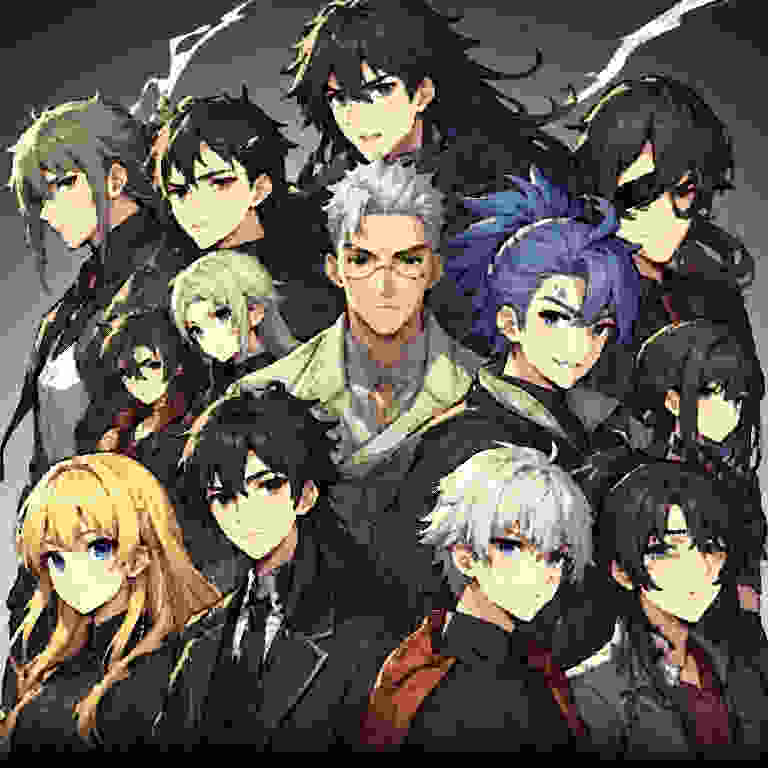

In the vibrant worlds of anime and manga, the spotlight often shines brightest on the protagonist—the hero with a dream, the chosen one, the fighter with unyielding resolve. Yet, the true depth, color, and soul of a story are almost always provided by the supporting cast. These characters—the mentors, rivals, friends, and foils—are not mere decorations. They are the narrative engine, the emotional anchor, and the mirror that makes the protagonist’s journey resonate. Their impact is both subtle and profound, shaping stories into timeless classics.
The Foundational Roles: Why Supporting Characters Matter
1. They Define and Develop the Protagonist.
A hero in a vacuum is uninteresting. Supporting characters act as catalysts, challenging and revealing the main character’s core. The fiery, honor-bound Sasuke Uchiha forces Naruto Uzumaki (Naruto) to confront his loneliness and deepen his resolve. In My Hero Academia, the calm, analytical Tenya Iida and the explosive Katsuki Bakugo provide starkly different benchmarks against which Izuku Midoriya measures his own growth, pushing him to adapt his strategies and ideology. Without them, the hero’s evolution feels hollow.
2. They Expand the World and Its Stakes.
Protagonists often see the world through a singular goal. Supporting characters showcase its breadth and complexity. In One Piece, the diverse dreams of the Straw Hat Crew—Nami’s cartography, Sanji’s All Blue, Chopper’s medical mastery—transform the Grand Line from a simple pirate route into a tapestry of personal aspirations. In Attack on Titan, the perspectives of soldiers like the pragmatic Jean Kirschtein or the loyal Sasha Braus ground the apocalyptic conflict in tangible human fear and courage, making the world feel lived-in and the stakes devastatingly real.
3. They Provide Thematic Resonance and Emotional Depth.
The main theme of a story is often carried and echoed by its supporting cast. Fullmetal Alchemist: Brotherhood explores the cost of human transgression and the value of connection not just through the Elric brothers, but through tragic figures like Scar, who embodies the cycle of revenge, and Maes Hughes, whose love for his family represents everything worth protecting. In Jujutsu Kisen, Junpei Yoshino’s tragic arc explores themes of alienation and manipulation that mirror and deepen Yuji Itadori’s core conflict about the value of a “proper death.”
4. They Drive the Plot and Enable Growth.
Often, the protagonist‘s power-ups and pivotal decisions are facilitated by supporters. In Demon Slayer, the stoic guidance of Sakonji Urokodaki and the unwavering support of Nezuko Kamado are the bedrock of Tanjiro Kamado’s quest. In Hunter x Hunter, Killua Zoldyck is not just a friend to Gon Freecss; he is a strategic partner whose unique skills and dark past are essential for their survival and success in the Hunter Exam and beyond. Mentors like Bleach’s Kisuke Urahara or Dragon Ball’s Master Roshi exist explicitly to unlock the hero’s potential and set the plot in motion.
5. They Offer Relatability and Audience Surrogacy.
Not every viewer can relate to possessing Nine-Tailed Fox chakra or wielding a Zanpakuto. But many can relate to the academic pressure felt by Kaguya-sama: Love is War’s Chika Fujiwara, the social anxiety of Komi Can’t Communicate’s Tadano, or the quiet loyalty of Mob Psycho 100’s Ritsu Kageyama. These characters give the audience a direct, relatable entry point into extraordinary worlds. They react with the awe, fear, or confusion we might feel, bridging the gap between the fantastic and the human.
The Indelible Impact: When Supporting Characters Steal the Show
The most masterful writing allows supporting characters to become icons in their own right, sometimes eclipsing the protagonist in cultural impact.
- The Scene-Stealers: Characters like Jujutsu Kaisen’s Satoru Gojo or Chainsaw Man’s Power captivate audiences with their sheer charisma and unpredictable nature, becoming viral sensations and driving massive fan engagement. Their presence guarantees dynamism.
- The Emotional Heart: In CLANNAD, the gentle friendship and wisdom of Kotomi Ichinose or Fuko Ibuki provide some of the story’s most heartbreakingly beautiful moments, encapsulating its themes of family and memory. In Fruits Basket, the nuanced struggles of the Sohma family members like Yuki and Kyo are so compelling they feel like co-protagonists, each carrying equal emotional weight.
- The Unforgettable Foils: A perfect rival elevates a hero. Vegeta (Dragon Ball Z) evolved from a genocidal villain into a proud, relentless rival whose journey of pride and redemption is as compelling as Goku’s. Askeladd (Vinland Saga) serves as a dark mentor and philosophical counterpoint to Thorfinn, shaping his entire worldview through conflict.
- The Pillars of Genre: In slice-of-life and comedy, the entire premise often rests on the supporting cast. The absurdity of The Disastrous Life of Saiki K. is amplified by the oblivious, quirky students surrounding him. The heart of Haikyu!! isn’t just Shoyo Hinata’s jump; it’s the symbiotic partnership with Tobio Kageyama and the unique, irreplaceable roles of every member of Karasuno, from the calm Daichi Sawamura to the nervous Tadashi Yamaguchi.
Conclusion: The Symphony of Story
A great anime or manga is not a solo performance, but a symphony. The protagonist may carry the melody, but it is the supporting characters who provide the harmony, rhythm, and bass—the elements that give the music body, emotion, and complexity. They teach us that a hero’s strength is defined by those they fight alongside, that a world is only as rich as its inhabitants, and that sometimes, the most impactful person in a story is not the one destined to save the world, but the friend who teaches them why it’s worth saving. From the steadfast nakama to the charismatic rival, these unseen pillars are, in truth, the foundation upon which legendary stories are built.



Pingback: Dragon Ball vs One Piece : Comparison of Two Anime Giants – Akusaa.com discuss Anime, Gaming, and misc things