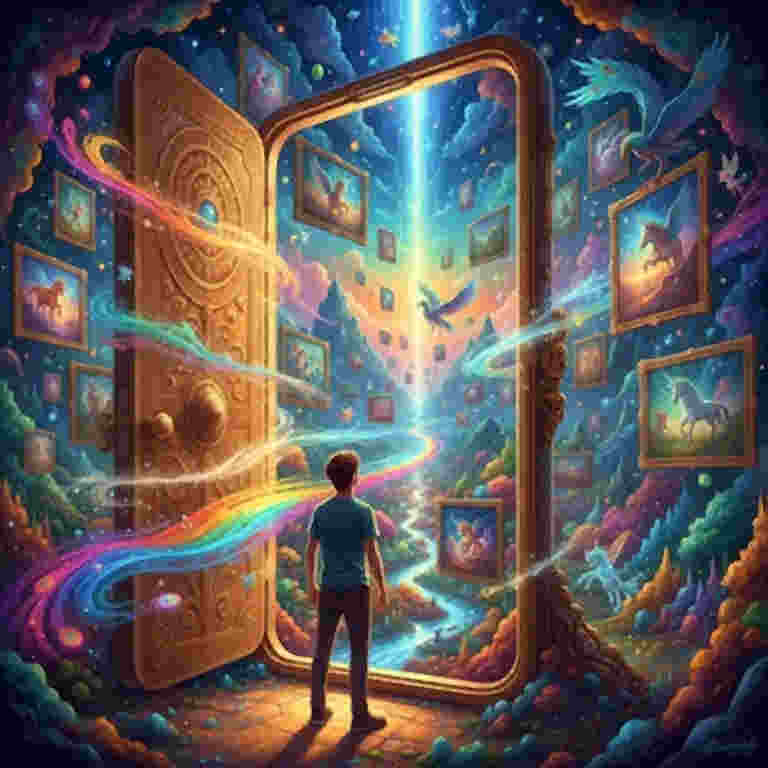

Fantasy is not merely a genre in anime and manga; it is the primordial clay from which countless worlds are sculpted. It is the gateway to the impossible, a narrative space where the only limit is the creator’s imagination. From epic tales of knights and dragons to intimate stories of spirits in urban alleyways, the fantasy genre encompasses a breathtaking spectrum. Its journey from niche folklore to the bedrock of global pop culture is a story of evolving human desire, artistic ambition, and the timeless need for myth in a modern age.
Defining the Fantasy Core: The Building Blocks of Another World
At its essence, fantasy is fiction that incorporates irreducible elements of the impossible or supernatural that are not accepted in our consensus reality. It creates a secondary world (or alters our own) with its own internal logic. This core can manifest through several key pillars:
- The Secondary World & Worldbuilding: This is the genre’s cornerstone. Whether it’s a fully realized alternate universe like Made in Abyss’s layered, mysterious ecosystem or a hidden layer atop our own like Jujutsu Kaisen‘s society of sorcerers and curses, the world must feel coherent and lived-in. Its rules—magic systems, social structures, geography—are what grant the story weight and wonder.
- The Presence of Magic or the Supernatural: This is the active ingredient. Magic can be a hard, rule-based system of energy manipulation (Hunter x Hunter‘s Nen, Fullmetal Alchemist’s law of Equivalent Exchange), a soft, mysterious force of nature (Spirited Away’s spirit world rules), or a divine/arcane gift. It encompasses not just spells, but gods, demons, mythical creatures, and psychic abilities.
- The Journey and the Quest: Fantasy is inherently driven by movement—both physical and spiritual. The narrative often follows a hero’s journey, whether it’s a physical trek across continents (Mushoku Tensei: Jobless Reincarnation), a climb into the unknown depths (Made in Abyss), or a personal quest for revenge (Redo of Healer), power, knowledge, or redemption. The quest structures the exploration of the world and the self.
- Archetypes and Thematic Conflict: Fantasy readily uses archetypal figures—the chosen hero, the wise mentor, the dark lord, the loyal companion—but the best works reinvent them. The conflicts are often grand and thematic: Good vs. Evil, Order vs. Chaos, Civilization vs. Nature, Technology vs. Tradition, and the burden of Free Will vs. Destiny.
The Evolution of Enchantment: From Folklore to Global Phenomenon
The roots of Japanese fantasy in anime and manga are deeply entwined with the nation’s own rich history of Shinto folklore, Buddhist cosmology, and imported Western myths.
The Foundational Era (1960s-70s): Myth and Adventure
Early anime fantasy drew directly from global and local legends. Osamu Tezuka’s Hi no Tori (Phoenix) was an ambitious, philosophical series reincarnating the mythical bird across time and space, exploring existential themes. Mighty Atom (Astro Boy), while sci-fi, presented a robot with a soul, a fantasy of artificial humanity. The first major fantasy epic was *Leiji Matsumoto’s space opera Space Battleship Yamato and Galaxy Express 999, which blended sci-fi aesthetics with fantastical, romantic quests across the stars. Hollywood-style sword-and-sorcery also appeared, like the classic The Little Norse Prince.
The Golden Age Boom (1980s-90s): Refinement and Genre-Defining Epics
This era saw fantasy mature, diversify, and achieve global fame.
- The Hayao Miyazaki & Studio Ghibli Revolution: Miyazaki didn’t just make films; he defined an entire aesthetic of fantasy. Nausicaä of the Valley of the Wind presented a post-apocalyptic bio-fantasy world. My Neighbor Totoro found magic in the rural countryside. Princess Mononoke crafted a profound, bloody epic about the clash between forest gods and human industrialization. Ghibli’s fantasy was ecological, humane, and visually sublime.
- The RPG Influence & Isekai Genesis: The success of video games like Dragon Quest and Final Fantasy had a massive impact. Record of Lodoss War was literally born from tabletop RPG session records, codifying the Western-style “party adventure” in anime form. This also gave rise to the early Isekai (another world) prototype, The Vision of Escaflowne, which blended mecha, fantasy, and romance.
- The Dark Fantasy Emergence: Series like Berserk delivered a medieval fantasy of unparalleled darkness and psychological depth, exploring trauma and cosmic horror. Slayers offered a successful comedic counterpoint with its dysfunctional party of adventurers.
The Modern Mainstream (2000s-Present): Deconstruction, Specialization, and Dominance
Fantasy has become the dominant narrative mode, particularly through the Isekai boom, while also splintering into sophisticated subgenres.
- The Isekai Explosion: The fantasy genre’s popularity is now inextricably linked to Isekai. Starting with seminal works like .hack// and Sword Art Online (which used a “game world” framework), the genre exploded with series like Re:Zero, Mushoku Tensei, and That Time I Got Reincarnated as a Slime. Isekai perfected a potent formula: a relatable, modern protagonist entering a fantasy world with game-like rules (levels, skills, menus), offering a power fantasy of competence and a fresh start.
- Deconstruction and Depth: Modern fantasy often interrogates classic tropes. Fullmetal Alchemist: Brotherhood presented a rigorously rule-based magic system to explore war, genocide, and the cost of truth. Attack on Titan began as a horror-fantasy and evolved into a complex political and historical myth. Vinland Saga uses the Viking age to deconstruct the warrior ethos and search for peace.
- Urban and Contemporary Fantasy: Magic intrudes on the modern world in series like Jujutsu Kaisen (curses and sorcerers in Tokyo), Demon Slayer (traditional demons in Taisho-era Japan), and Mob Psycho 100 (espers in a mundane society). This bridges the gap between the familiar and the fantastical.
- The “Comfy” and Specialized Fantasy: A counter-movement focuses on low-stakes, world-building-heavy fantasy. Frieren: Beyond Journey’s End explores an elf mage’s life after the epic quest. Delicious in Dungeon blends dungeon crawling with culinary science. Ascendance of a Bookworm is an Isekai about revolutionizing publishing in a medieval world.
The Fantasy Genre in Film and Its Distinction from Anime and Manga
The fantasy genre in film is characterized by imaginative narratives that incorporate magical elements, mythical creatures, and otherworldly settings, often exploring themes of heroism, quests, and moral dilemmas. Iconic films like The Lord of the Rings, Harry Potter, and Pan’s Labyrinth showcase richly crafted worlds that transport audiences into realms of wonder and escapism, blending visual artistry with compelling storytelling. Unlike anime and manga, which are rooted in their own unique cultural contexts and often employ distinct artistic styles, fantasy films typically adhere to a more global cinematic language. While anime and manga can explore deeper psychological themes and often feature episodic storytelling, fantasy films tend to focus on self-contained narratives and visual spectacle. Additionally, anime often blends genres, incorporating elements of sci-fi, romance, and horror, whereas fantasy films maintain a clear focus on magical and mythological aspects. This difference extends to audience engagement, as anime and manga frequently foster community interaction through fan discussions and conventions, while fantasy films often rely on a collective cinematic experience within theaters. Overall, the fantasy genre in film captures imagination through its visual storytelling, while anime and manga provide a more varied and expansive exploration of similar themes.
The Engine of Enchantment: Why Fantasy Captivates Universally
Fantasy’s unwavering popularity stems from its ability to fulfill fundamental human needs:
- The Escape into Wonder: It offers pure, untethered escapism from daily life into realms of awe and adventure. It rekindles a sense of childlike wonder.
- A Mirror for Reality, at a Safe Distance: By displacing contemporary issues—xenophobia, war, environmental crisis, social crisis—into fantastical settings, it allows for powerful, allegorical commentary without direct confrontation. The conflict in Princess Mononoke or Fullmetal Alchemist feels epic yet resonates with real-world parallels.
- The Power of Myth and Meaning: In an increasingly secular and scientific age, fantasy provides new myths. It explores grand questions of good and evil, destiny, sacrifice, and the human condition through symbolic, larger-than-life stories.
- The Ultimate Sandbox for Creativity: For creators, it offers limitless freedom. They can build entire ecosystems, cultures, magic laws, and histories, making the world itself a character. This creative potential attracts immense artistic talent.
- The Wish-Fulfillment and Empowerment Fantasy: Particularly in Isekai and power-fantasy stories, it allows the audience to imagine themselves as the special one, the hero, the savior, or simply as someone valued and powerful in a new world.
Conclusion: The Unending Story
The fantasy genre in anime and manga has evolved from simple adaptations of folklore to the medium’s most versatile and dominant narrative engine. It has grown to hold every possible tone—from the grimdark realism of Berserk to the cozy culinary adventures of Delicious in Dungeon, from the psychological torture of Re:Zero to the melancholic beauty of Frieren.
Its popularity is a testament to a universal truth: humans are, and have always been, storytellers who need magic. We need to believe in hidden worlds, in unseen forces, in the potential for transformation, and in heroes who confront the darkness—whether that darkness is a demon lord, a corrupt empire, or the shadows within the human heart. Fantasy doesn’t just offer an escape from reality; it offers an escape into a deeper reality, where the struggles, triumphs, and wonders of existence are painted on a grander, more luminous canvas. As long as we crave meaning, wonder, and a good story, the gates to the fantasy realm will remain forever open, inviting us to explore the endless possibilities of “what if.”




Pingback: 5 Fantasy Themed Anime you could enjoy. – Akusaa.com discuss Anime, Gaming, and misc things