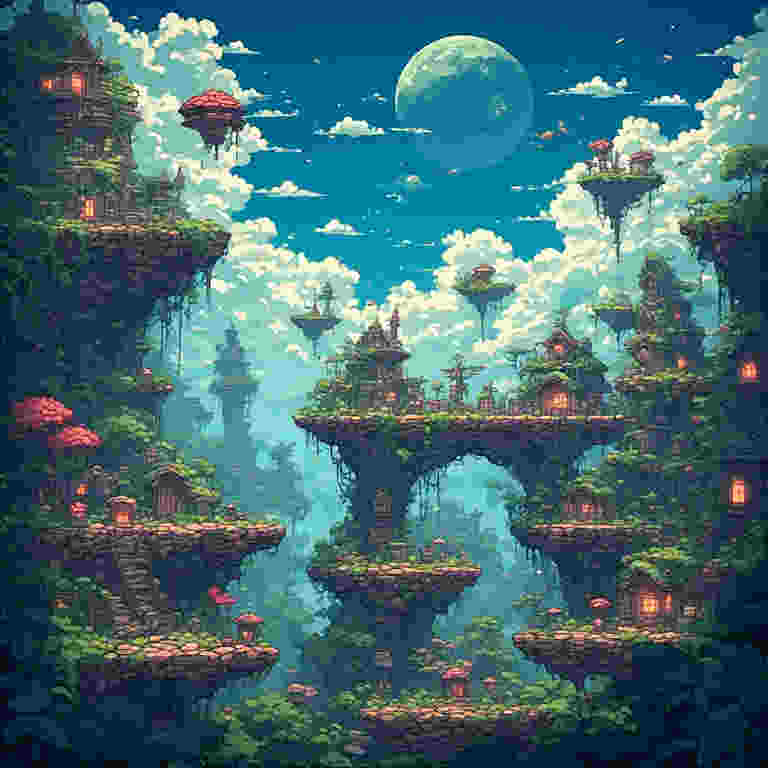

Metroidvania represents one of gaming’s most beloved and enduring genres—a style of game design that transforms exploration into an art form, rewards curiosity and mastery, and creates interconnected worlds that reveal themselves gradually like elaborate puzzles. Understanding what makes a Metroidvania, why the genre has thrived for decades, and how modern games continue innovating within this framework reveals fundamental truths about what makes exploration in games so deeply satisfying.
Defining Metroidvania
The term “Metroidvania” combines the names of two landmark series: Nintendo’s “Metroid” and Konami’s “Castlevania.” More specifically, it refers to the exploration-focused design pioneered by “Metroid” (1986) and “Super Metroid” (1994), then popularized and refined by “Castlevania: Symphony of the Night” (1997).
Core Defining Characteristics
Interconnected World: Rather than linear levels, Metroidvanias feature large, interconnected maps where areas link together organically. You might start in one region, drop down several screens, move through a cave system, and emerge in an entirely different area—all part of one continuous world.
Ability-Gated Progress: Certain areas remain inaccessible until you acquire specific abilities or items. You might encounter a ledge too high to reach, a door requiring a certain key, or a wall that can only be broken with a particular weapon. Returning with new abilities opens previously blocked paths.
Exploration and Backtracking: The genre encourages revisiting areas with new abilities to access previously unreachable locations. That corridor you passed an hour ago might now be accessible with your new double-jump ability, revealing secrets or progression paths.
Non-Linear Progression: While some sequence must be followed, players often have choices about where to explore and what order to tackle challenges. Different players might experience the same game in meaningfully different sequences.
Environmental Storytelling: The world itself tells stories through its design, atmosphere, and visual details rather than relying heavily on explicit narrative exposition.
Gradual Empowerment: Players grow more powerful through the game, not just in stats but in actual capabilities—movement options, combat tools, and ways to interact with the environment all expand.
The Origins: Metroid and Castlevania
Metroid’s Revolutionary Design
The original “Metroid” (1986) on NES broke conventions by presenting a vast interconnected world instead of discrete levels. Players explored planet Zebes in any direction, gradually mapping the world mentally as they discovered new paths and abilities.
“Super Metroid” (1994) on SNES refined this formula into near-perfection. The game masterfully guided players without explicit direction, using visual cues, enemy placement, and level design to suggest paths forward while rewarding curiosity and thoroughness. The feeling of gradually mastering Samus’s abilities—from simple jumps to running, bombing, and eventually flying through environments—created a deeply satisfying progression arc.
The atmosphere of isolation, the wordless storytelling, and the joy of discovering secrets hidden in the expansive world established the template countless games would follow.
Castlevania’s Transformation
The “Castlevania” series began as linear action-platformers, but “Castlevania: Symphony of the Night” (1997) revolutionized the franchise by adopting Metroid’s exploration-focused design while adding RPG elements—leveling systems, equipment, stats, and inventory management.
Symphony of the Night’s gothic castle became an iconic game world, and the game’s famous twist—revealing an inverted castle effectively doubling the game’s size—demonstrated how Metroidvania design could create shocking revelations through spatial design alone.
The fusion of action-platforming, RPG progression, and exploration-focused level design created the blueprint for countless future games, cementing “Metroidvania” as a distinct genre rather than just “games inspired by Metroid.”
What Makes Metroidvania Design Awesome
The genre’s enduring appeal stems from how it satisfies multiple psychological rewards simultaneously.
The Joy of Exploration
Metroidvanias capture the pure pleasure of exploration—pushing into unknown territory, wondering what lies beyond the next door, and feeling rewarded when curiosity leads to discoveries. Unlike open-world games where exploration can feel aimless, Metroidvania worlds are carefully crafted spaces where every area has purpose and discoveries feel meaningful.
The genre respects player curiosity. That suspiciously placed wall probably does hide something. That distant platform you can barely see likely contains a reward. Players learn to look carefully, experiment with abilities, and think about the environment, creating active engagement rather than passive traversal.
The Satisfaction of Mastery
As you gain new abilities, movement through the world transforms. Areas that once required careful platforming become trivial to traverse. Enemies that once posed threats become minor obstacles. This tangible sense of growth and mastery creates deep satisfaction—you’re not just statistically stronger, you’re genuinely more capable.
Returning to early areas with late-game abilities showcases how far you’ve progressed. The opening zone that felt dangerous and limiting becomes a playground where you can sequence-break through areas, accessing secrets impossible during your first visit.
The “Aha!” Moments
Metroidvanias excel at creating revelation moments. You spot a passage you couldn’t reach earlier, suddenly remember seeing similar passages elsewhere, and realize your new ability opens multiple new paths. These cognitive connections—holding the map in your mind and recognizing new possibilities—engage problem-solving skills in satisfying ways.
The best Metroidvanias plant seeds early. You see an area clearly out of reach in hour one, wonder how you’ll eventually access it, then experience genuine delight in hour eight when you finally have the tools to explore it. The delayed gratification and spatial memory required create memorable moments of “finally!”
Respecting Player Intelligence
The genre typically avoids hand-holding, trusting players to observe, experiment, and figure things out. This respect for player intelligence creates a collaborative relationship between designer and player—the designer creates intricate systems and hides secrets cleverly, while the player brings curiosity, observation, and problem-solving.
Modern Metroidvanias often include optional hints or map markers for players who want guidance, but the genre’s core appeals to those who enjoy feeling clever for discovering solutions themselves.
The Perfect Gameplay Loop
Metroidvanias create an addictive loop: explore new areas, fight enemies and bosses, gain new abilities, return to previous areas to access new paths, discover secrets, repeat. This loop naturally segments the experience into satisfying chunks while maintaining momentum toward complete mastery of the world.
The loop accommodates different play sessions—you might explore thoroughly, hunting secrets, or push forward seeking progression. Both approaches feel rewarding, and the same game can be replayed with different priorities.
Classic Metroidvania Pioneers
Games like “Super Mario Land” (1989), “Gunstar Heroes” (1993), “Gothic” (2001), and “Shadow Complex” (2009) showcase the Metroidvania genre’s roots, offering exploration, platforming, and power-up progression. These titles demonstrate the genre’s early focus on non-linear design and atmospheric storytelling, creating a unique gaming experience.
Mega Man’s Metroidvania Mastery
Mega Man‘s platforming series, particularly “Zero” and “X”, incorporate Metroidvania elements, offering a unique blend of action and exploration. The series’ focus on ability-giving upgrades and non-linear level design make it a great fit for the genre, showcasing Mega Man’s versatility and charm.
Tomb Raider’s Exploration Excellence
The “Shadow of the Colossus” and “Rise of the Tomb Raider” showcase Tomb Raider‘s Metroidvania elements, offering vast, interconnected environments and a focus on exploration and skill-building. The series’ emphasis on environmental storytelling and atmospheric tension creates a thrilling experience, making it a great example of the genre’s evolution.
The Age of Modern Metroidvanias
While the genre’s foundations were laid in the 80s and 90s, we’re currently experiencing a renaissance of Metroidvania games that expand, refine, and innovate on the formula.
Hollow Knight (2017)
Though technically released before 2018, “Hollow Knight” deserves mention as it defined modern Metroidvania excellence and continues influencing the genre. Team Cherry’s masterpiece presents a vast underground kingdom filled with challenging combat, beautiful hand-drawn art, mysterious lore, and some of the most satisfying exploration in gaming.
The game’s approach to discovery—minimal guidance, cryptic hints, and rewards for observation and experimentation—exemplifies what makes the genre special. The interconnected caverns of Hallownest reveal themselves gradually, with each new charm (ability) and nail upgrade transforming how you engage with the world.
This is the trailer of the game: Hollow Knight.
Ori and the Will of the Wisps (2020)
Moon Studios’ sequel to “Ori and the Blind Forest” refined already exceptional movement and platforming into something breathtaking. The fluid animation, responsive controls, and creative movement abilities make traversal itself a joy, while the emotional narrative and stunning visual design create a memorable experience.
The game demonstrates how Metroidvanias can emphasize movement as the primary pleasure, with combat and exploration supporting the core satisfaction of gracefully navigating beautiful environments.
This is the trailer of the game: Ori and the Will of the Wisps.
Ender Lilies: Quietus of the Knights (2021)
This dark fantasy Metroidvania combines challenging combat with haunting atmosphere. The game’s unique mechanic—recruiting defeated enemies as spirits who fight alongside you—provides strategic depth while maintaining the exploration-focused design. The grim, rain-soaked world and melancholic soundtrack create a distinctive tone that sets it apart from other entries in the genre.
This is the trailer of the game: Ender Lilies: Quietus of the Knights.
Metroid Dread (2021)
The long-awaited return of 2D Metroid didn’t just continue the series—it modernized it. “Metroid Dread” adds intensity through E.M.M.I. zones where indestructible robots hunt you, creating genuine tension. The fluid controls, satisfying combat, and clever level design prove the series that named the genre can still innovate within it.
The game’s approach to ability-gating includes not just movement abilities but also changing how you perceive the environment, adding layers to exploration that feel fresh despite following traditional Metroidvania structure.
This is the trailer of the game: Metroid Dread.
Blasphemous and Blasphemous II (2019, 2023)
These Spanish-developed games bring dark, religious imagery and brutal difficulty to the Metroidvania formula. The grotesque art style inspired by Holy Week imagery creates an unforgettable aesthetic, while challenging combat rewards careful play. The sequel expands the formula with improved combat systems and even more intricate world design.
This is the trailer of the game: Blasphemous II.
Deaths Door (2021)
While not a pure Metroidvania—it features discrete areas rather than one continuous map—”Death’s Door” captures the genre’s spirit of exploration and ability-gated progress. As a crow working as a reaper, you navigate a beautifully designed world with clever puzzles, engaging combat, and a charming art style. The game demonstrates how Metroidvania principles can be adapted to different structures.
This is the trailer of the game: Death’s Door.
Axiom Verge 2 (2021)
Thomas Happ’s sequel to his acclaimed Metroidvania takes bold creative risks, offering a different experience than the first game while maintaining the genre’s core appeals. The game adds puzzle-solving and alternate dimensions to traditional Metroidvania exploration, creating unique mechanical variety.
This is the trailer of the game: Axiom Verge 2.
Nine Sols (2024)
This recent entry combines Metroidvania exploration with challenging deflection-based combat inspired by “Sekiro.” Set in a dying Asian-inspired world with hand-drawn art, the game brings fresh cultural aesthetics and combat complexity to the genre while maintaining satisfying exploration and progression.
This is the trailer of the game: Nine Sols.
Prince of Persia: The Lost Crown (2024)
Ubisoft’s return to 2D Prince of Persia adopts Metroidvania design to excellent effect. The time manipulation abilities create unique traversal challenges and puzzle-solving opportunities, while the fluid platforming honors the series’ legacy. The game includes extensive accessibility options and a memory system that lets players screenshot areas for later reference—a thoughtful quality-of-life feature that respects both modern sensibilities and core genre appeal.
This is the trailer of the game: Prince of Persia: The Lost Crown.
Animal Well (2024)
This recent indie release brings puzzle-solving focus to Metroidvania design. The pixel art world hides layers of secrets, some requiring community collaboration to discover. The game emphasizes observation and experimentation over combat, showing how the genre’s structure can support different gameplay emphases.
This is the trailer of the game: Animal Well.
Earlier Modern Classics
Several games from the 2010s helped establish the modern Metroidvania renaissance and remain influential:
Guacamelee! and Guacamelee! 2 (2013, 2018)
These Mexican folklore-inspired games combine Metroidvania exploration with complex platforming challenges and wrestling-based combat. The vibrant art style, humor, and creative dimension-swapping mechanics create a distinctive identity while honoring genre traditions.
This is the trailer of the game: Guacamelee! 2.
Bloodstained: Ritual of the Night (2019)
Created by Koji Igarashi, director of “Symphony of the Night,” this spiritual successor proves the genre’s creator still understands what makes it work. The gothic castle setting, RPG systems, and vast array of abilities and equipment provide dozens of hours of exploration and experimentation.
This is the trailer of the game: Bloodstained: Ritual of the Night.
Dead Cells (2018)
This roguelike-Metroidvania hybrid brings procedural generation and permadeath to the genre while maintaining interconnected world design and ability-gated progress. The fluid combat, extensive weapon variety, and replayability demonstrate how Metroidvania principles can combine with other genres successfully.
This is the trailer of the game: Dead Cells.
Iconoclasts (2018)
Joakim Sandberg’s solo-developed game emphasizes story and puzzle-solving within Metroidvania structure. The colorful pixel art, emotional narrative, and creative boss fights show how one developer’s vision can create something special within the genre’s framework.
This is the trailer of the game: Iconoclasts
The Genre’s Flexibility
One of Metroidvania’s strengths is how adaptable the core principles are to different styles and emphases.
Combat-Focused Metroidvanias
Games like “Hollow Knight,” “Blasphemous,” and “Nine Sols” emphasize challenging combat, with boss battles serving as major progression gates. These games reward mastery of combat systems as much as exploration.
Platforming-Focused Metroidvanias
“Ori and the Will of the Wisps” and “Celeste” (which includes Metroidvania elements) prioritize movement and platforming precision. The joy comes from mastering increasingly complex movement challenges.
Story-Driven Metroidvanias
“Iconoclasts” and “Ender Lilies” weave narrative throughout exploration, using the genre’s structure to pace story revelations and create emotional arcs that complement mechanical progression.
Puzzle-Focused Metroidvanias
“Environmental Station Alpha” and “Animal Well” emphasize puzzle-solving and observation over combat, proving the genre’s structure supports diverse gameplay priorities.
Horror Metroidvanias
Games like “Carrion” (where you play as the monster) and upcoming titles in the horror space demonstrate how the genre’s isolated exploration and gradually revealed worlds create effective horror atmospheres.
Why Metroidvanias Work So Well
Respect for Player Time
Unlike sprawling open worlds that can feel overwhelming or padded, Metroidvanias typically feature tightly designed spaces where content density is high. Every area serves purpose, reducing the “empty space” problem that plagues some open-world games.
The genre also accommodates different completion levels. You can rush through main paths or thoroughly explore for secrets—both approaches feel rewarding, and games often track completion percentage, encouraging replay for 100% runs.
Memorable Worlds
Because Metroidvania worlds are hand-crafted and interconnected, they become memorable spaces players internalize. You remember the layout, recognize landmarks, and develop spatial understanding that creates genuine connection to the game world.
Unlike linear games where you move forward and forget previous areas, Metroidvanias ask you to hold the entire world in your mind, creating mental maps and spatial memories that persist long after playing.
Perfect for Indie Development
The genre’s structure suits small teams. A focused, interconnected world with hand-crafted content requires smaller teams than massive open worlds, allowing indie developers to create polished experiences without AAA budgets.
This has led to remarkable indie innovation within the genre, with small teams creating games that compete with or exceed major studio productions in quality and memorability.
Replayability
Metroidvanias often feature high replayability through multiple factors: sequence breaking (using advanced techniques to access areas early), speedrunning potential, multiple difficulty modes, and the simple pleasure of experiencing the well-designed world again with full knowledge of its secrets.
Many players replay favorites annually, finding new routes or challenges each time. The genre’s emphasis on player mastery means experienced players can have dramatically different experiences than first-timers.
Learning and Growth
Metroidvanias inherently teach players through gameplay rather than tutorials.
Observation Skills
The genre rewards careful observation—noticing breakable walls, finding hidden passages, recognizing patterns in enemy behavior. These observation skills transfer beyond gaming, encouraging attention to detail and pattern recognition.
Spatial Reasoning
Holding complex maps in your mind, recognizing spatial relationships between areas, and mentally rotating 2D spaces to understand connectivity all exercise spatial reasoning skills.
Problem-Solving
Figuring out how to access unreachable areas, determining ability order for optimal progression, and solving environmental puzzles all develop problem-solving approaches: observing the problem, identifying available tools, testing solutions, and adjusting based on results.
Persistence
Challenging Metroidvanias teach persistence. A difficult boss or tricky platforming section might require multiple attempts, teaching the value of learning from failure and gradually improving through practice.
Pattern Recognition
Combat, enemy behaviors, and environmental hazards train pattern recognition. Identifying enemy attack patterns, recognizing environmental cues, and noticing design language (certain blocks always break, specific colors indicate interactive elements) all develop cognitive skills.
Accessibility and Challenge
Modern Metroidvanias increasingly include accessibility options while maintaining satisfying challenge for those seeking it.
Games like “Ori and the Will of the Wisps” include multiple difficulty modes and specific accessibility toggles. “Celeste” famously includes assist mode allowing players to adjust game speed, air dashes, and invincibility—ensuring everyone can experience the story and world while preserving challenge for those desiring it.
“Prince of Persia: The Lost Crown” includes extensive options including aim assist, parry windows, health adjustments, and the innovative screenshot-memory system that helps players who struggle with spatial memory.
This approach recognizes that different players seek different experiences—some want brutal challenge, others want accessible exploration, and many fall somewhere between. Modern Metroidvanias increasingly accommodate this spectrum.
The Community Aspect
Metroidvanias foster active communities through several factors.
Shared Discovery
Communities form around sharing secrets, discussing optimal routes, and helping confused players find progression paths. The genre’s emphasis on discovery creates natural discussion points.
Speedrunning
The genre’s structure—multiple routes, sequence-breaking potential, mastery-based progression—makes Metroidvanias exceptional speedrunning games. “Super Metroid” remains one of speedrunning’s most popular games decades after release, and modern entries like “Hollow Knight” and “Metroid Dread” have thriving speedrunning communities.
Challenge Runs
Players create custom challenges: no major upgrades, low-percent completions (finishing with minimal items), or self-imposed restrictions that transform familiar games into new challenges.
Artistic Appreciation
The genre attracts players who appreciate game design craft. Communities discuss level design, ability progression pacing, and environmental storytelling techniques, treating games as artistic works worthy of analysis.
Design Lessons from Metroidvanias
The genre teaches valuable lessons applicable to all game design.
Show, Don’t Tell
The best Metroidvanias convey information visually and through gameplay rather than text exposition. Background details, environmental storytelling, and design language teach players without explicit instruction.
Meaningful Collectibles
Unlike games with hundreds of meaningless collectibles, Metroidvania upgrades and secrets feel valuable—they enhance capabilities, reveal lore, or provide satisfaction through clever hiding and discovery.
Pacing Through Geography
The genre paces experiences through spatial design rather than just story beats. Different areas offer different atmospheres, challenges, and visual identities, creating natural variety through exploration rather than scripted sequences.
Respecting Player Agency
By allowing players to choose exploration paths and discover things at their own pace, Metroidvanias create collaborative storytelling where each player’s experience differs slightly, making the experience feel personal.
The Future of Metroidvania
The genre continues evolving with new releases and innovations.
3D Metroidvanias
While the genre is primarily 2D, some games experiment with 3D Metroidvania design. The “Metroid Prime” trilogy successfully translated the formula to first-person 3D, and modern games continue exploring 3D possibilities while maintaining core Metroidvania principles.
Genre Fusion
Combining Metroidvania with roguelikes (“Dead Cells”), soulslikes (various challenging combat-focused entries), or puzzle games creates hybrid experiences that expand what the genre can be.
Narrative Innovation
Some developers are exploring how to integrate more complex narratives with Metroidvania exploration, using the genre’s structure to pace story revelations and create narrative arcs that complement mechanical progression.
Accessibility Expansion
Future entries will likely continue expanding accessibility options, recognizing that the joy of exploration and discovery shouldn’t be limited to those who can handle extreme difficulty.
Why Metroidvania Endures
Decades after “Super Metroid” and “Symphony of the Night” established the template, Metroidvanias remain beloved because they tap into fundamental human desires: curiosity, mastery, discovery, and accomplishment.
The genre respects players—trusting them to figure things out, rewarding observation and cleverness, and creating worlds worth exploring thoroughly rather than rushing through. In an era of games that often feel like they’re wasting your time with padding or filler, Metroidvanias feel focused and purposeful.
The satisfaction of gradually mastering a game world, seeing previously impossible areas become accessible, and experiencing “aha!” moments when new abilities reveal new possibilities creates gameplay experiences that stick in memory long after completion.
Whether you prefer challenging combat in “Hollow Knight,” fluid movement in “Ori,” puzzle-solving in “Animal Well,” or any other emphasis the genre supports, Metroidvanias offer something special—the joy of exploring intricately designed worlds that reward curiosity and intelligence.
The genre is awesome because it makes exploration itself the reward, transforms limitation into anticipation (that unreachable area becomes something to look forward to), and creates satisfying arcs of growth where you genuinely become more capable. It’s gaming at its most empowering, mysterious, and satisfying—and as recent releases prove, the genre has plenty of room for continued innovation while maintaining the core principles that make it special.
For anyone who’s ever felt the thrill of discovering a hidden passage, the satisfaction of finally accessing a previously unreachable area, or the joy of mastering movement through a beautifully designed space, Metroidvanias are awesome because they distill these experiences into their purest form, creating adventures that respect your intelligence, reward your curiosity, and trust you to find your own path through carefully crafted worlds.




Pingback: Top 20 SNES Games That Are Still Great Today – Akusaa.com discuss Anime, Gaming, and misc things
Pingback: Tomb Raider vs God of War vs Uncharted: Comparison of the Epic Journey – Akusaa.com discuss Anime, Gaming, and misc things
That is fun
I play castlevania since 2005
Very good playin
I truly appreciate this post.Really looking forward to read more. Much obliged..
This means a lot, thank you!